
The Free Thinkers guide to the Bible
Part 4 #8 – Jacob becomes Israel
The establishment of the Priesthood
The introduction of “Ritually Clean, Drink offering and Gid hanosheh”
Welcome back to the Free Thinkers guide to the bible. I created this series so that ‘anyone’ can explore and understand the bible. You don’t need to be a biblical scholar; all you need is a desire to see what is written. I will present to you several biblical examples and demonstrate the process of sifting the accounts to reveal the hidden. This process is very similar to archeology, where the layers are excavated and analyzed.
Just not the dirty part, though you will be digging up some dirt along the way.
Warning:
The series unfolds like a story in a book. Please study the content in the order it is presented in order to have the best experience. The study series begins with Part 1 #1 – The Flood
Preface
In the fourth study we build upon the knowledge we acquired in the first three studies. We have found that there are at least two distinct authors and a superb redactor(s) that created, edited and merged accounts and stories in the books of Genesis, Exodus, Numbers and Deuteronomy. In the second study we highlighted accounts that diminished or promoted Moses and Aaron. In the third study we highlighted accounts that revealed that the “A” account writer(s) focused on Aaron and priestly matters. The “B” account writer(s) focused on telling stories and made no mention of priestly matters, Aaron was revealed to be a leader of the people and he and Hur were in charge when Moses went up to the Mount.
In this portion of the study we examine the “Jacob/Israel” account. We will use the information we gathered in the first three studies to dig deeper and explore the areas that require close examination.
Jacobs name becomes Israel “B”
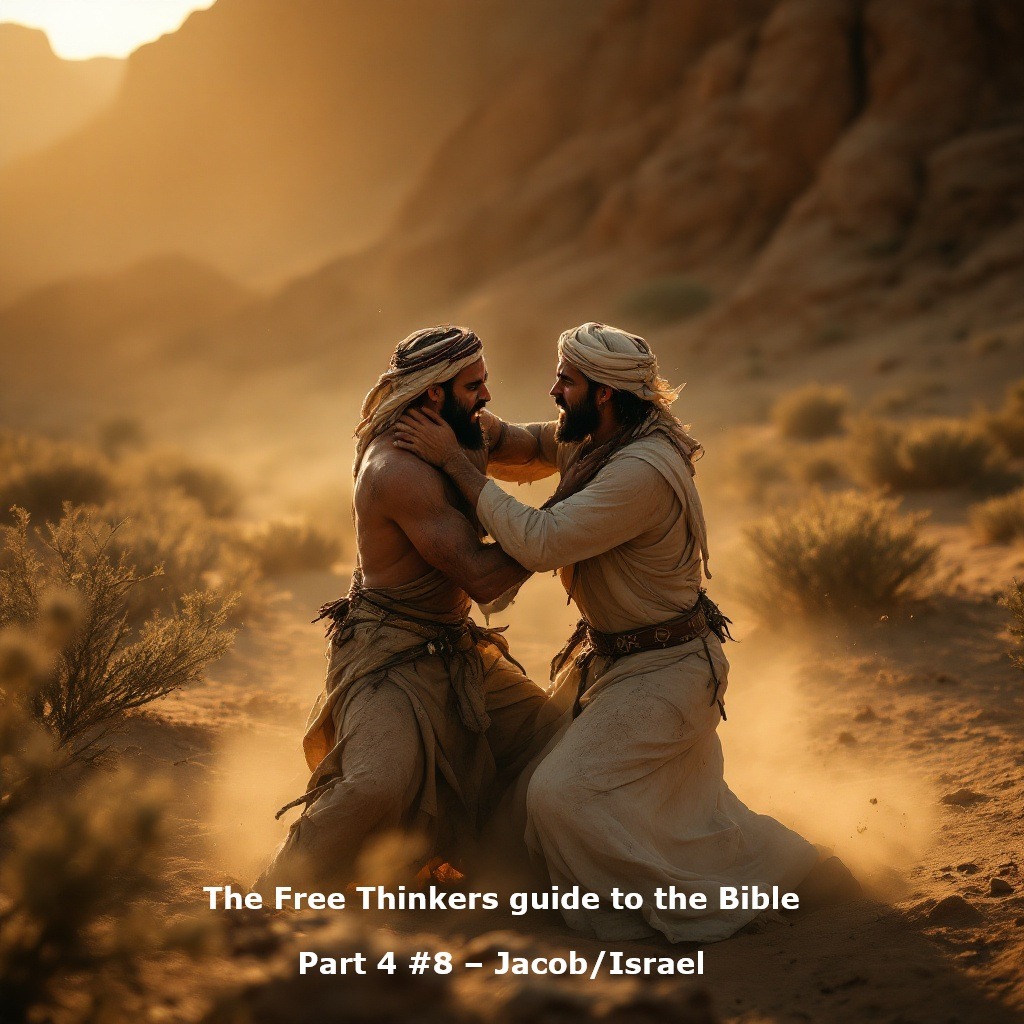
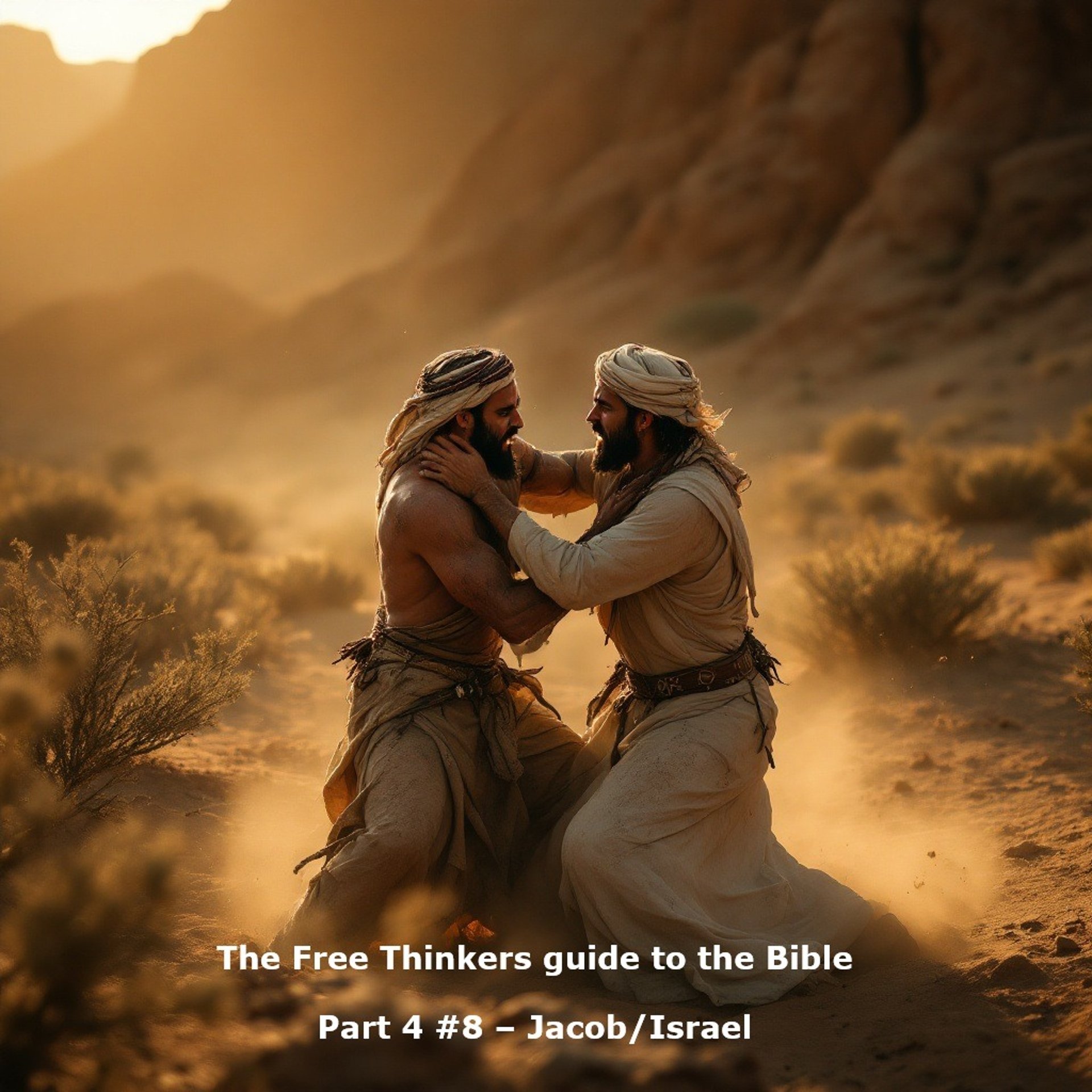
Gen 32:22 And he rose up that night, and took his two wives, and his two women servants, and his eleven sons, and passed over the ford Jabbok. 23 And he took them, and sent them over the brook, and sent over that he had. 24 And Jacob was left alone; and there wrestled a man with him until the breaking of the day. 25 And when he saw that he prevailed not against him, he touched the hollow of his thigh; and the hollow of Jacob's thigh was out of joint, as he wrestled with him. 26 And he said, let me go, for the day breaketh. And he said, I will not let thee go, except thou bless me. 27 And he said unto him, what is thy name? And he said, Jacob. 28 And he said, Thy name shall be called no more Jacob, but Israel: for as a prince (שָׂרָה) hast thou power with God and with men, and hast prevailed.
29 And Jacob asked him, and said; tell me, I pray thee, thy name. And he said, Wherefore is it that thou dost ask after my name? And he blessed him there. 30 And Jacob called the name of the place Peniel: for I have seen God face to face, and my life is preserved. 31 And as he passed over Penuel the sun rose upon him, and he halted upon his thigh.
This “B” story is interesting. It tells a tale of Jacob wrestling with a ‘man’ that he considered to be a representative of God. Jacob receives the blessing of a name change for persevering during the event. Jacob called the name of the place where the story took place: Peniel/Penuel (The face of God).
Note: This story contains the first occurrence of the name of Jacob being changed to Israel and the first mention in the Bible of the descendants of Jacob being called (“Israel” from (שָׂרָה – to prevail/have power as a prince)) in verse thirty-two…
Gen 32:32 Therefore the children of Israel eat not of the sinew which shrank, which is upon the hollow of the thigh, unto this day: because he touched the hollow of Jacob's thigh in the sinew that shrank.
This is an excellent example of a scribal insertion that definitely bears investigation. The words “unto this day” (הזה היום עד) gives us a clue to when the scribe wrote the insertion based on the reference to the Jewish ‘Halachic’ ‘mitzvah’ of ‘gid hanosheh’.
Halacha – Jewish law – literally “way to behave/walk”
Mitzvah – A commandment – One of 613 Mitzvoth according to Jewish tradition – A commandment from God to be performed as a religious duty.
Gid hanosheh – “Forgotten sinew” – According to Halacha the sinew may not be eaten by the Jewish people – The prohibition against eating the sinew is located in the seventh chapter of the Mishna.
Mishna – To study by repetition/to study by review – A compilation of rabbinic legal opinions and debates - The first collection of oral traditions also known as the oral laws - The oldest surviving manuscripts date to the 6th century CE.
With this information in mind we are able to determine that this redactor/scribal addition was added at a time when the Mitzvah of Gid hanosheh was being observed.
Note: The prohibition of consuming the Gid hanosheh is considered to be the third mitzvah (commandment) in the torah. The Mishnah Chullin defines the Jewish rulings regarding the Gid hanosheh.
Is there a specific command from God written anywhere in the Torah regarding the prohibition of the consumption of the Gid hanosheh? Or is this prohibition based on a tradition that was created to honor the perseverance of Jacob/Israel in the story?
Command from God or command of men?
I leave this for you to contemplate.
While we are on this topic, I have a similar prohibition that I will present to you for your review. The command to not mix meat and dairy…
There are three examples of not seething a suckling goat/lamb (גּדי – gediy) in its mother’s milk. The three examples are associated with the ‘command’ to appear before the Lord and perform offerings to Him. Read the examples and consciously look at them. Do they all appear to be attached as a “by the way” or “in addition to” the commands?
Exo 34:23 Thrice in the year shall all your men children appear before the Lord GOD, the God of Israel. 24 For I will cast out the nations before thee, and enlarge thy borders: neither shall any man desire thy land, when thou shalt go up to appear before the LORD thy God thrice in the year. 25 Thou shalt not offer the blood of my sacrifice with leaven; neither shall the sacrifice of the feast of the Passover be left unto the morning. 26 The first of the firstfruits of thy land thou shalt bring unto the house of the LORD thy God. Thou shalt not seethe a kid in his mother's milk.
Exo 23:16 And the feast of harvest, the firstfruits of thy labours, which thou hast sown in the field: and the feast of ingathering, which is in the end of the year, when thou hast gathered in thy labours out of the field. 17 Three times in the year all thy males shall appear before the Lord GOD. 18 Thou shalt not offer the blood of my sacrifice with leavened bread; neither shall the fat of my sacrifice remain until the morning. 19 The first of the firstfruits of thy land thou shalt bring into the house of the LORD thy God. Thou shalt not seethe a kid in his mother's milk.
Deu 14:21 Ye shall not eat of any thing that dieth of itself: thou shalt give it unto the stranger that is in thy gates, that he may eat it; or thou mayest sell it unto an alien: for thou art an holy people unto the LORD thy God. Thou shalt not seethe a kid in his mother's milk. 22 Thou shalt truly tithe all the increase of thy seed, that the field bringeth forth year by year. 23 And thou shalt eat before the LORD thy God, in the place which he shall choose to place his name there, the tithe of thy corn, of thy wine, and of thine oil, and the firstlings of thy herds and of thy flocks; that thou mayest learn to fear the LORD thy God always.
All three accounts contain the exact same wording. (לא־תבשׁל גדי בחלב אמו)
The literal translation is: Do not cook a young goat in its mother’s milk.
The Mishnah Chullin 8 defines the Jewish rulings regarding this ‘command’. The sages added the restrictions of mixing meat and dairy when cooking, when they are 'allowed' to be on the table and the amount of time a person must wait before they may be consumed and ‘mixed’ in the stomach.
I present this information to you for your consideration as it has bearing on the original topic.
Jacobs name becomes Israel “A”
Gen 35:1 And God said unto Jacob, Arise, go up to Bethel, and dwell there: and make there an altar unto God that appeared unto thee when thou fleddest from the face of Esau thy brother. 2 Then Jacob said unto his household, and to all that were with him, Put away the strange gods that are among you, and be clean (טָהֵר - ṭâhêr), and change your garments: 3 And let us arise, and go up to Bethel; and I will make there an altar unto God, who answered me in the day of my distress, and was with me in the way which I went. 4 And they gave unto Jacob all the strange gods which were in their hand, and all their earrings which were in their ears; and Jacob hid them under the oak which was by Shechem.
5 And they journeyed: and the terror of God was upon the cities that were round about them, and they did not pursue after the sons of Jacob. 6 So Jacob came to Luz, which is in the land of Canaan, that is, Bethel, he and all the people that were with him. 7 And he built there an altar, and called the place Elbethel: because there God appeared unto him, when he fled from the face of his brother.
8 But Deborah Rebekah's nurse died, and she was buried beneath Bethel under an oak: and the name of it was called Allonbachuth.
9 And God appeared unto Jacob again, when he came out of Padanaram, and blessed him. 10 And God said unto him, Thy name is Jacob: thy name shall not be called any more Jacob, but Israel shall be thy name: and he called his name Israel.
11 And God said unto him, I am God Almighty: be fruitful and multiply; a nation and a company of nations shall be of thee, and kings shall come out of thy loins; 12 and the land which I gave Abraham and Isaac, to thee I will give it, and to thy seed after thee will I give the land. 13 And God went up from him in the place where he talked with him. 14 And Jacob set up a pillar in the place where he talked with him, even a pillar of stone: and he poured a drink offering thereon, and he poured oil thereon. 15 And Jacob called the name of the place where God spake with him, Bethel.
In this “A” account of the name change God tells Jacob to travel to Bethel and build an altar to Him. Jacob instructs everyone in his household to give him their nekar (foreign mighty ones) and to change their garments (become clean). The people of his household gave him their nekar and nezem (earrings which may have been associated with the nekar). Jacob buried them beneath a tree in Bethel. Jacob then built the altar in Bethel.
God appeared to Jacob and changed his name to Israel and blessed him as he did his father’s; that he would be the father of many and the inheritance of the land where they dwelled.
Jacob then set up a pillar (matstsebah – memorial stone) anointed it and performed the first and only drink offering in the Genesis scroll.
Word Occurrences:
God – 11X
Bethel – 6X
Altar – 3X
Clean – 1X (טָהֵר - ṭâhêr) to be pure, levitically uncontaminated
Drink offering – 1X (נֵסֶךְ- nêsek) always used to refer to drink offerings to GOD or gods; or molten idols.
Strange gods – 1X (נֵכָר - nêkâr) (אֱלֹהִים) foreign mighty ones
Notes on Bethel: In verse seven Jacob called the name of the place he was instructed to go (which is Bethel): Elbethel (Mighty House of God) after he built the altar.
In verse fifteen after anointing the pillar; Jacob names the place a second time; Bethel (House of God).
The repetition of the name/naming of Bethel establishes authority to the event and the location. It is similar to use of “as it is to this day” in assigning significance to something. Let’s take a quick look at the “The Stairway to Heaven” study for affirmation of this… Back to Beth'el...
The House of God “A”
Gen 28:17 And he was afraid, and said, how dreadful is this place! This is none other but the house of God, and this is the gate of heaven. 18 And Jacob rose up early in the morning, and took the stone that he had put for his pillows, and set it up for a pillar, and poured oil upon the top of it. 19 And he called the name of that place Bethel (House of El): but the name of that city was called Luz at the first. 20 And Jacob vowed a vow, saying, If God will be with me, and will keep me in this way that I go, and will give me bread to eat, and raiment to put on, 21 So that I come again to my father's house in peace; then shall the LORD be my God: 22 And this stone, which I have set for a pillar, shall be God's house: and of all that thou shalt give me I will surely give the tenth unto thee.
Same Bethel? Or different Bethel? Jacob set up a pillar and anointed it on both occasions. Same pillar? Or different pillar? I leave this for you to contemplate.
Conclusion
The pattern of evidence is obvious at this point in the studies. The “A” account writer(s) intentionally inserted priestly matters into the earlier writings to give them authority and to introduce the readers to the priestly concepts that would be further developed in the Exodus, Leviticus, Numbers and Deuteronomy accounts.
The “A” Creation account introduced the seventh day Sabbath and Blessing. (Genesis 1)
The “A” writer(s) then introduced covenant, Clean/unclean animals, the Altar, Olah offerings, a sweet savour, and the prohibition against eating meat with the blood in the Flood account. (Genesis 6-9)
The “A” writer(s) introduced the Priesthood, tithing and priestly authority in the Melchizedek account. (Genesis 14)
The “A” writer(s) introduced the eternal ritual of the eighth day circumcision in the Abrahamic covenant account. (Genesis 17)
The “A” writer(s) reinforced the priestly matters of Olah offerings and the Altar in the Sacrifice of Isaac account (Genesis 22)
The “A” writer(s) introduced the priestly matters of The House of God, Anointing and vowing to God. Tithing was also affirmed in the Stairway to heaven account (Genesis 28)
The “A” writer(s) introduced Defiled and reinforced the priestly matter of circumcision in the Defiling of Dinah account (Genesis 34)
The “A” writer(s) introduced Ritually Clean, Drink offering, the mitzvah of Gid hanosheh and reinforced anointing. We also covered the prohibition against mixing meat and dairy in these accounts. (G 32 & 35)
Please continue with us in the study:
Part 3 #9 - The three sister wife stories
All of the material on this site is the product of my twenty-five years of research and study in the fields of Middle Eastern history, archeology (focusing on the Levant), biblical theology, (the study of the Christian, Judaic and Islamic religions), linguistics (I have studied the Hebrew and Greek languages in order to gain the original writers perspectives). I have personal experience with the following faiths: Southern Baptist, WWCG, CGI, Messianic Judaism and Judaism I lived in a torah based monotheist community based on humanist teachings and values for several years. I have been writing studies/articles and parables since the early 2000s. I published many of my works on the www.YHWHisEl.com site at that time; with a focus on monotheism and the non deity of Jesus (Yehoshua).
After identifying many peculiarities in the TaNaKh while teaching, I tasked myself with determining the source of the inconsistencies. I began my search in the first five books of the bible. I read through them many times, locating inconsistencies and attempting to find the golden key that would unlock them. I read many articles, publications and books in which the authors attempted to explain the irregularities (most based on a version of the JDEP theory) and I tested each against the inconsistencies and all of them failed to provide a viable answer.
I then used critical thinking and tested potential theories until I finally found the solution that solved every problematic area. The Free thinkers guide to the Bible is the culmination of this process.
I only use AI for images on this site; I did not use it to reach my conclusion and I do not use it to write or structure my material. I do not condone AI scraping or any other form of theft of intellectual property.
If you choose to share the information I present; please be courteous and give credit to this site and myself (the author).
Author: Hoyt Allen Spiker - 2024 - Shemoth20@Gmail.com