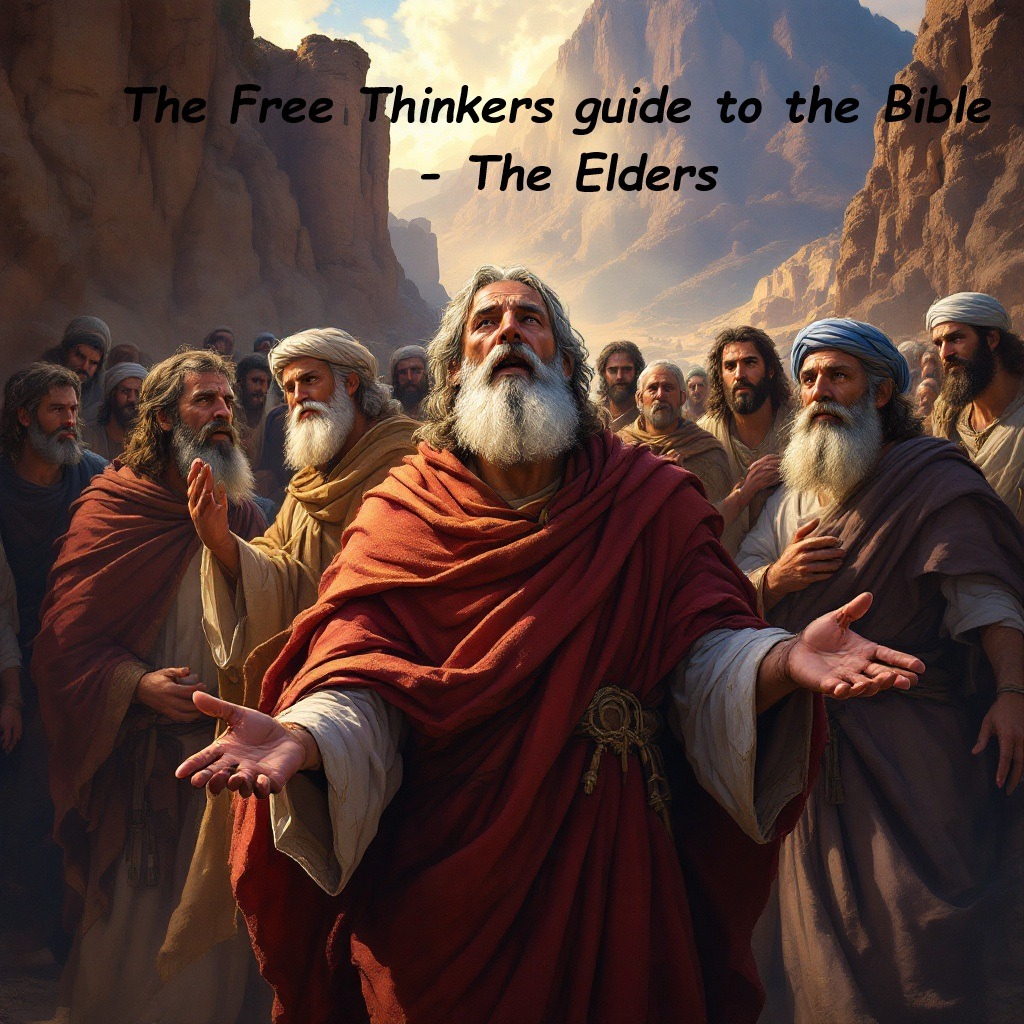
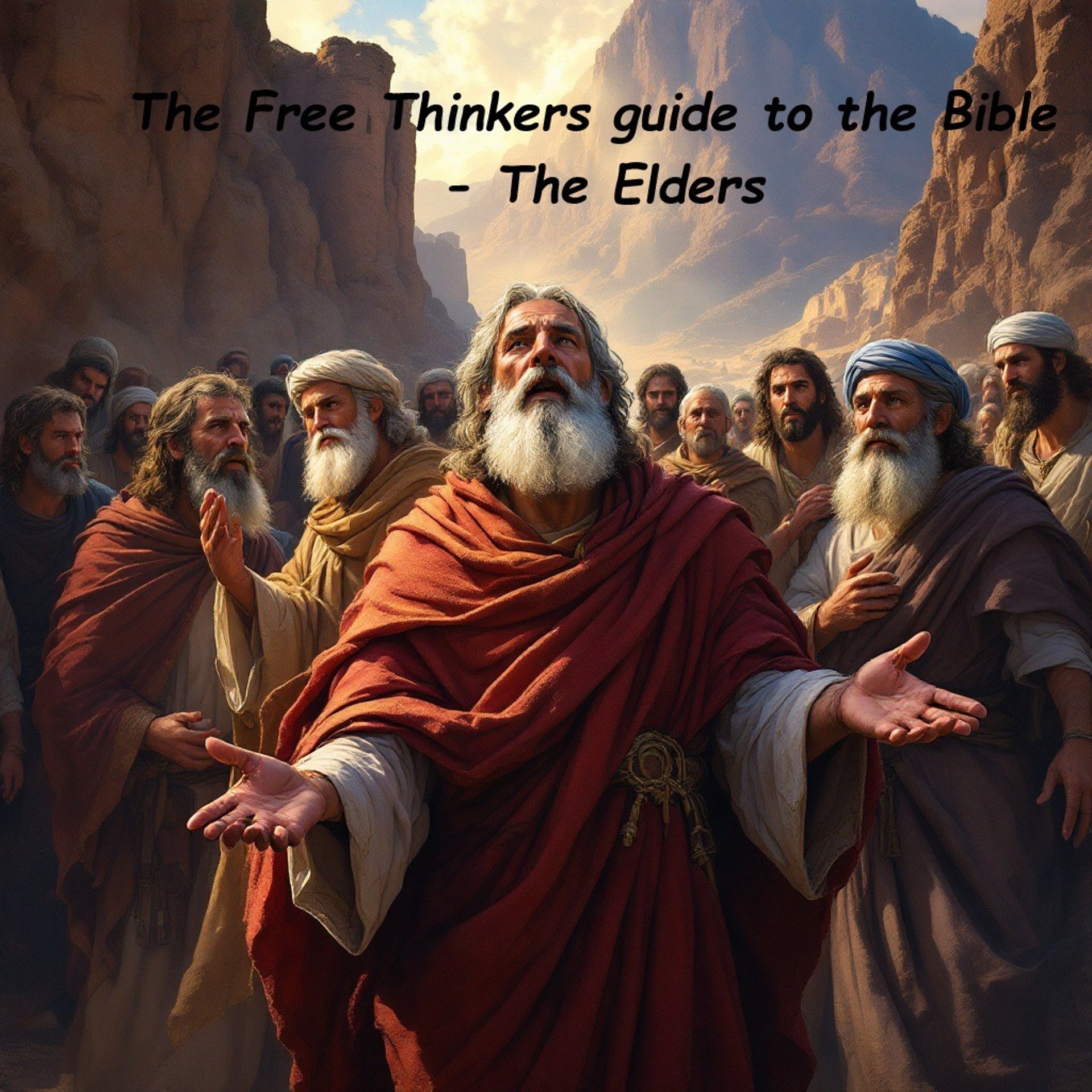

The Free Thinkers guide to the Bible
Wise and Able men? or Elders?
Help!... I need somebody… Helppp!
Moses was over burdened and needed help judging the people.
Who, how, when and why were they chosen?
Wise and Able men? or Elders?
Welcome back to the Free Thinkers guide to the bible. I created this series so that ‘anyone’ can explore and understand the bible. You don’t need to be a biblical scholar; all you need is a desire to see what is written. I will present to you several biblical examples and demonstrate the process of sifting the accounts to reveal the hidden. This process is very similar to archeology, where the layers are excavated and analyzed.
Just not the dirty part, though you will be digging up some dirt along the way.
Advisory:
The series unfolds like a story in a book. Please study the content in the order it is presented to have the best learning experience. The study series begins with Part 1 #1 – The Flood
Preface
Welcome to the Wise and Able men? or Elders? study. In this section we build upon the knowledge we acquired in the previous studies. The focus of this examination is to display and contrast the “A” with the “B” & “D” writer’s accounts regarding the appointment of judges to help relieve Moses of the burden that he was carrying.
We find that there are three differing accounts. Two of the accounts are similar and as we have seen in many of our previous studies; the third account differs significantly from the others. We will examine the accounts and explore the differences.
We begin with the first person recollection in Deuteronomy…
Moses appoints leaders “D” firsthand account
Deu 1:6 The LORD our God spake unto us in Horeb, saying, Ye have dwelt long enough in this mount: 7 Turn you, and take your journey, and go to the mount of the Amorites, and unto all the places nigh thereunto, in the plain, in the hills, and in the vale, and in the south, and by the sea side, to the land of the Canaanites, and unto Lebanon, unto the great river, the river Euphrates. 8 Behold, I have set the land before you: go in and possess the land which the LORD sware unto your fathers, Abraham, Isaac, and Jacob, to give unto them and to their seed after them.
9 And I spake unto you at that time, saying, I am not able to bear you myself alone: 10 The LORD your God hath multiplied you, and, behold, ye are this day as the stars of heaven for multitude. 11(The LORD God of your fathers make you a thousand times so many more as ye are, and bless you, as he hath promised you!) 12 How can I myself alone bear your cumbrance, and your burden, and your strife? 13 Take you wise men, and understanding, and known among your tribes, and I will make them rulers over you. 14 And ye answered me, and said, The thing which thou hast spoken is good for us to do. 15 So I took the chief of your tribes, wise men, and known, and made them heads over you, captains over thousands, and captains over hundreds, and captains over fifties, and captains over tens, and officers among your tribes. 16 And I charged your judges at that time, saying, Hear the causes between your brethren, and judge righteously between every man and his brother, and the stranger that is with him. 17 Ye shall not respect persons in judgment; but ye shall hear the small as well as the great; ye shall not be afraid of the face of man; for the judgment is God's: and the cause that is too hard for you, bring it unto me, and I will hear it. 18 And I commanded you at that time all the things which ye should do.
D) Deuteronomy: Moses chooses leaders ~ Key words/phrases: the chief (rô'sh) of your tribes, wise (châkâm) men, and known (yâda‛) /captains (śar) over thousands, and captains over hundreds, and captains over fifties, and captains over tens/I am not able to bear you myself alone/the cause that is too hard for you, bring it unto me
“D” Synopsis: Moses told the people that he couldn’t continue to judge their matters because there were too many troubles for him to tend to by himself. The people selected leaders and Moses appointed an unknown number of wise men to judge the smaller matters and to be leaders over the thousands, hundreds and tens. He instructed them to judge righteously and to send any matter that they couldn’t adjudicate to him.
Jethro counsels Moses to select leaders
Moses appoints leaders “B”
Exo 18:1 When Jethro, the priest of Midian, Moses' father in law, heard of all that God had done for Moses, and for Israel his people, and that the LORD had brought Israel out of Egypt; 2 Then Jethro, Moses' father in law, took Zipporah, Moses' wife, after he had sent her back, 3 And her two sons; of which the name of the one was Gershom; for he said, I have been an alien in a strange land: 4 And the name of the other was Eliezer; for the God of my father, said he, was mine help, and delivered me from the sword of Pharaoh: 5 And Jethro, Moses' father in law, came with his sons and his wife unto Moses into the wilderness, where he encamped at the mount of God: 6 And he said unto Moses, I thy father in law Jethro am come unto thee, and thy wife, and her two sons with her. 7 And Moses went out to meet his father in law, and did obeisance, and kissed him; and they asked each other of their welfare; and they came into the tent. 8 And Moses told his father in law all that the LORD had done unto Pharaoh and to the Egyptians for Israel's sake, and all the travail that had come upon them by the way, and how the LORD delivered them. 9 And Jethro rejoiced for all the goodness which the LORD had done to Israel, whom he had delivered out of the hand of the Egyptians. 10 And Jethro said, Blessed be the LORD, who hath delivered you out of the hand of the Egyptians, and out of the hand of Pharaoh, who hath delivered the people from under the hand of the Egyptians. 11 Now I know that the LORD is greater than all gods: for in the thing wherein they dealt proudly he was above them.
12 And Jethro, Moses' father in law, took a burnt offering and sacrifices for God: and Aaron came, and all the elders of Israel, to eat bread with Moses' father in law before God.
13 And it came to pass on the morrow, that Moses sat to judge the people: and the people stood by Moses from the morning unto the evening. 14 And when Moses' father in law saw all that he did to the people, he said, What is this thing that thou doest to the people? why sittest thou thyself alone, and all the people stand by thee from morning unto even? 15 And Moses said unto his father in law, because the people come unto me to enquire of God: 16 When they have a matter, they come unto me; and I judge between one and another, and I do make them know the statutes of God, and his laws. 17 And Moses' father in law said unto him, The thing that thou doest is not good. 18 Thou wilt surely wear away, both thou, and this people that is with thee: for this thing is too heavy for thee; thou art not able to perform it thyself alone. 19 Hearken now unto my voice, I will give thee counsel, and God shall be with thee: Be thou for the people to God-ward, that thou mayest bring the causes unto God: 20 And thou shalt teach them ordinances and laws, and shalt shew them the way wherein they must walk, and the work that they must do. 21 Moreover thou shalt provide out of all the people able men, such as fear God, men of truth, hating covetousness; and place such over them, to be rulers of thousands, and rulers of hundreds, rulers of fifties, and rulers of tens: 22 And let them judge the people at all seasons: and it shall be, that every great matter they shall bring unto thee, but every small matter they shall judge: so shall it be easier for thyself, and they shall bear the burden with thee. 23 If thou shalt do this thing, and God command thee so, then thou shalt be able to endure, and all this people shall also go to their place in peace.
24 So Moses hearkened to the voice of his father in law, and did all that he had said. 25 And Moses chose able men out of all Israel, and made them heads over the people, rulers of thousands, rulers of hundreds, rulers of fifties, and rulers of tens. 26 And they judged the people at all seasons: the hard causes they brought unto Moses, but every small matter they judged themselves.
27 And Moses let his father in law depart; and he went his way into his own land.
B) Exodus: Jethro counsels Moses to select leaders before ascending the Mount and Moses appoints leaders.
Key words/phrases
Able (khah'-yil) men out of all Israel
Captains over thousands, and captains over hundreds, and captains over fifties, and captains over tens
This thing is too heavy for thee; thou art not able to perform it thyself alone
The hard causes they brought unto Moses
Synopsis
Jethro advised Moses that he shouldn’t continue to judge the people by himself because it would be too heavy a burden for him to bear. He counseled Moses to choose men who feared God and would judge with fairness and teach them the ordinances and laws of God. Moses agreed and selected an unknown number of leaders and appointed them to judge the smaller matters and to be leaders over the thousands, hundreds and tens.
“B” Notes: Verse twelve contains three priestly key words and one key word that is associated with the study. The verse interjects Aaron, Burnt offering, sacrifice and elders into the account. When this verse is removed; the account flows smoothly and seamlessly. I would posit to you that this is a typical “A” writer insertion that is similar to the other insertions we have uncovered in the previous studies. The addition of the “elders” in the verse should become apparent after completing this study.
“D”/”B” comparison: the two accounts share a common theme; Moses was over burdened judging the peoples matters. He appointed an unknown number of wise/fair men to judge the smaller matters and appointed them to be leaders over the thousands, hundreds and tens.
The Seventy elders - “A” account
We begin the “A” account with the first mention of the seventy elders. We identified these verses as a priestly account in the ‘Moses on the Mount’ study. The second seventy elders account is craftily inserted into the “B” writers Quail account...
Introduction to the ‘seventy elders’ at the Mount
Exo 24:1 And he said unto Moses, Come up unto the LORD, thou, and Aaron, Nadab, and Abihu, and seventy of the elders of Israel; and worship ye afar off. 2 And Moses alone shall come near the LORD: but they shall not come nigh; neither shall the people go up with him. 3 And Moses came and told the people all the words of the LORD, and all the judgments: and all the people answered with one voice, and said, all the words which the LORD hath said will we do. 4 And Moses wrote all the words of the LORD, and rose up early in the morning, and builded an altar under the hill, and twelve pillars, according to the twelve tribes of Israel. 5 And he sent young men of the children of Israel, which offered burnt offerings, and sacrificed peace offerings of oxen unto the LORD. 6 And Moses took half of the blood, and put it in basons; and half of the blood he sprinkled on the altar. 7 And he took the book of the covenant, and read in the audience of the people: and they said, all that the LORD hath said will we do, and be obedient. 8 And Moses took the blood, and sprinkled it on the people, and said, Behold the blood of the covenant, which the LORD hath made with you concerning all these words. 9 Then went up Moses, and Aaron, Nadab, and Abihu, and seventy of the elders of Israel: 10 And they saw the God of Israel: and there was under his feet as it were a paved work of a sapphire stone, and as it were the body of heaven in his clearness. 11 And upon the nobles of the children of Israel he laid not his hand: also they saw God, and did eat and drink.
“A” Synopsis: We read in these verses that the Lord instructed Moses to ascend the Mount with Aaron, his sons Nadab and Abihu and seventy elders of Israel. We see several key “A” writer words in the account besides Aaron and his sons: Altar, sacrifice, burnt offerings, peace offerings, the sprinkling of blood (on the altar and the people), the scroll of the covenant and the blood of the covenant. We also read in this account that those who ascended the Mount “saw” God (two mentions); in contrast to verses that state that no-one can see God and live in the “B” accounts.
“A” Notes: There are only six mentions in the bible of ‘seventy elders (zâqên)’. Two are located in the “A” Exodus twenty-four account above, three times in Numbers eleven and one time in an unassociated prophecy in Ezekiel chapter eight.
We read in this account that Aaron and his two oldest sons were instructed by the Lord to go up the Mount with the seventy elders to ‘worship’. There was no priesthood at that time as the coronation of Aaron and his sons did not occur until after Moses received the Ten Commands. Also note that according to this account Moses performed the first ritual of sprinkling of blood (on the people and the altar); which then became a priestly duty after Moses sprinkled blood on Aaron and his sons at their priestly coronation described in the priestly Leviticus scroll.
The Seventy elders selected in Kibrothhattaavah – “A”
Here comes the judge, Here comes the judge…
Numbers 11:11 And Moses said unto the LORD, Wherefore hast thou afflicted thy servant? and wherefore have I not found favour in thy sight, that thou layest the burden of all this people upon me? 12 Have I conceived all this people? have I begotten them, that thou shouldest say unto me, Carry them in thy bosom, as a nursing father beareth the sucking child, unto the land which thou swarest unto their fathers? ***
14 I am not able to bear all this people alone, because it is too heavy for me. 15 And if thou deal thus with me, kill me, I pray thee, out of hand, if I have found favour in thy sight; and let me not see my wretchedness. 16 And the LORD said unto Moses, Gather unto me seventy men of the elders of Israel, whom thou knowest to be the elders of the people, and officers over them; and bring them unto the tabernacle of the congregation, that they may stand there with thee. 17 And I will come down and talk with thee there: and I will take of the spirit which is upon thee, and will put it upon them; and they shall bear the burden of the people with thee, that thou bear it not thyself alone. ***
24 And Moses went out, and told the people the words of the LORD, and gathered the seventy men of the elders of the people, and set them round about the tabernacle. 25 And the LORD came down in a cloud, and spake unto him, and took of the spirit that was upon him, and gave it unto the seventy elders: and it came to pass, that, when the spirit rested upon them, they prophesied (nâbâ'), and did not cease. 26 But there remained two of the men in the camp, the name of the one was Eldad, and the name of the other Medad: and the spirit rested upon them; and they were of them that were written, but went not out unto the tabernacle: and they prophesied (nâbâ') in the camp. 27 And there ran a young man, and told Moses, and said, Eldad and Medad do prophesy (nâbâ') in the camp. 28 And Joshua the son of Nun, the servant of Moses, one of his young men, answered and said, My lord Moses, forbid them. 29 And Moses said unto him, Enviest thou for my sake? would God that all the LORD'S people were prophets, (nâbı̂y') and that the LORD would put his spirit upon them! 30 And Moses gat him into the camp, he and the elders of Israel.
"A" Synopsis
Moses complained to the Lord about having to bear the responsibility of leading the people by himself. The seventy elders were assembled at the Tabernacle and given the same spirit as Moses and then prophesied (including Eldad and Medad who were not present at the tabernacle).
This “A” account/insertion focuses on three subjects…
Moses complained to the Lord that the burden of leading the people was too difficult to bear.
We must ask ourselves the questions: Would Moses complain to the Lord? and if so, would he do it in such a disrespectful manner?
We must ask ourselves the questions: Would Moses complain to the Lord? and if so, would he do it in such a disrespectful manner? Also, would Moses have doubted that the Lord could/would provide for the people? You should know the answer to these questions (especially if you have participated in the previous studies).
The seventy elders were assembled at the Tabernacle (Ohel).
According to the “A” writers account; ‘The Tabernacle’ was constructed during the time Israel was encamped around Mount Horeb. This became the central place of worship/gathering in the “A” accounts.
Note: This was the first event that occurred at the Tabernacle after it was consecrated.
The seventy elders were given the same spirit as Moses and then prophesied.
We found in our previous studies that the “A” writers inserted accounts that diminished the authority of Moses and elevated the authority of Aaron. The verses in this account are likely an attempt to further cast doubt on the ability of Moses to lead the people and to infer that a portion of his God given authority (spirit) was transferred to the ‘seventy elders’.
Note: This is the first occurrence of (nâbâ') prophesy – This word occurs only three times in the torah (first five books) all of them are in this account. Coincidence? or deliberate insertion? I leave this for you to decide based on the context and evidence presented.
Note: This is the third occurrence of prophet(s) in the bible. Before this event only Abraham and Aaron were designated as prophets (nâbı̂y').
Ask yourself the question; what were the elders prophesying about through the ‘spirit’ that was given to them? Inquiring minds want to know!
“A”/“D”/”B” comparison
The “D” & ”B” accounts share a common theme; Moses was over burdened judging the peoples matters. An unknown number of wise/fair men were appointed to judge the smaller matters and to be leaders over the thousands, hundreds and tens.
The “A” account differs greatly from the other accounts. It portrays Moses as complaining. It focuses on the introduction of prophets and prophesying and the transferring of the God given spirit from Moses and placing it on/in the seventy elders.
The elephant in the room – The seventy elders
We must now ask the question: Why do the priestly “A” scribes specify that seventy elders sit in the seats of judgment?
When we look at the ‘Great Sanhedrin’ which was the judicial assembly that served as the highest Judean court and law making authority we find a valuable clue. The Great Sanhedrin presided over judicial matters until approx. 425 CE. The Great Sanhedrin was composed of seventy members with a president (Nasi) in the place/seat of Moses presiding over the assembly.
Jewish tradition traces the Sanhedrin’s origin from the seventy elders account in Numbers eleven.
After the return of the people from Babylon it is thought that ‘Ezra the priest and scribe of the law of God’ organized an unknown number of men into ‘The ‘Men of the Great Assembly’. The ‘Anshei Knesset HaGedolah’ included Ezra, Nehemiah, Haggai, Zechariah, Malachi, Daniel and Ezekiel.
This Assembly was credited with the formation of the existing biblical canon, the introduction of Purim, religious prayers and rituals. Tradition asserts that this assembly was the foundation for the ‘Sanhedrin’.
With the information we posses we can hypothesize two possibilities regarding the formation of the Sanhedrin:
1) The Sanhedrin was created based on the “A” writers ‘seventy elders’ account. With the seat of Moses being replaced with a president.
2) The Sanhedrin was formed and the “A” writers inserted the seventy elders account to legitimize and give authority to the judicial Sanhedrin governing body.
Coincidence or Cunning?
I leave the determination to you.
All of the material on this site is the product of my twenty-five years of research and study in the fields of Middle Eastern history, archeology (focusing on the Levant), biblical theology, (the study of the Christian, Judaic and Islamic religions), linguistics (I have studied the Hebrew and Greek languages in order to gain the original writers perspectives). I have personal experience with the following faiths: Southern Baptist, WWCG, CGI, Messianic Judaism and Judaism I lived in a torah based monotheist community based on humanist teachings and values for several years. I have been writing studies/articles and parables since the early 2000s. I published many of my works on the www.YHWHisEl.com site at that time; with a focus on monotheism and the non deity of Jesus (Yehoshua).
After identifying many peculiarities in the TaNaKh while teaching, I tasked myself with determining the source of the inconsistencies. I began my search in the first five books of the bible. I read through them many times, locating inconsistencies and attempting to find the golden key that would unlock them. I read many articles, publications and books in which the authors attempted to explain the irregularities (most based on a version of the JDEP theory) and I tested each against the inconsistencies and all of them failed to provide a viable answer.
I then used critical thinking and tested potential theories until I finally found the solution that solved every problematic area. The Free thinkers guide to the Bible is the culmination of this process.
I only use AI for images on this site; I did not use it to reach my conclusion and I do not use it to write or structure my material.
I do not condone AI scraping or any other form of theft of intellectual property.
If you choose to share the information I present; please be courteous and give credit to this site and myself (the author).
Author: Hoyt Allen Spiker - 2025 - Shemoth20@Gmail.com