
The Free Thinkers guide to the Bible
Part 3 #1 - The Bread/Flesh from Heaven
The authority of Moses Vs the authority of Moses and Aaron
Welcome back to the Free Thinkers guide to the bible. I created this series so that ‘anyone’ can explore and understand the bible. You don’t need to be a biblical scholar; all you need is a desire to see what is written. I will present to you several biblical examples and demonstrate the process of sifting the accounts to reveal the hidden. This process is very similar to archeology, where the layers are excavated and analyzed.
Just not the dirty part, though you will be digging up some dirt along the way.
Advisory:
The series unfolds like a story in a book. Please study the content in the order it is presented in order to have the best experience. The study series begins with Part 1 #1 – The Flood
The series provides you with numerous examples of two distinct groups of scribal authors/redactors.
The first group is the "A" authors/redactors who focus on priestly matters; laws, rules and observances, as well as the tabernacle/temple services and offerings. The "A" authors and writing styles range from literary artisans to unskilled writers whose works are easily identified.
The second group consists of the “B” and “D” author(s)/redactor(s).
The “D” author/redactor chronicles the first person Moses account of the wilderness travels.
The “B” author(s)/redactor(s) wrote the stories in Genesis; Israel’s time in Egypt and the wilderness travels in Exodus and Numbers.
The “B” wilderness accounts harmonize with the “D” author’s first person Moses accounts; and is the reason they are grouped together.
In the study we compare the accounts and explore the differences between them to determine why the "A" priestly authors/redactors intentionally created similar yet separate accounts of many of the “B” author(s)/redactors stories.
Psalm 119:18 Open my eyes, that I might see wonders from Your Torah.
Preface
Welcome to the third portion of the study. In this portion we will build upon the knowledge we acquired in the first two studies. We have found that there are at least two distinct authors and a superb redactor(s) that has edited and merged accounts and stories in the books of Genesis, Exodus and Numbers. In the second study we highlighted accounts that diminished or promoted Moses and Aaron.
The focus of this study is on the accounts that contrast the leadership of Moses against the leadership of Moses and Aaron. Three of the examples will be new.
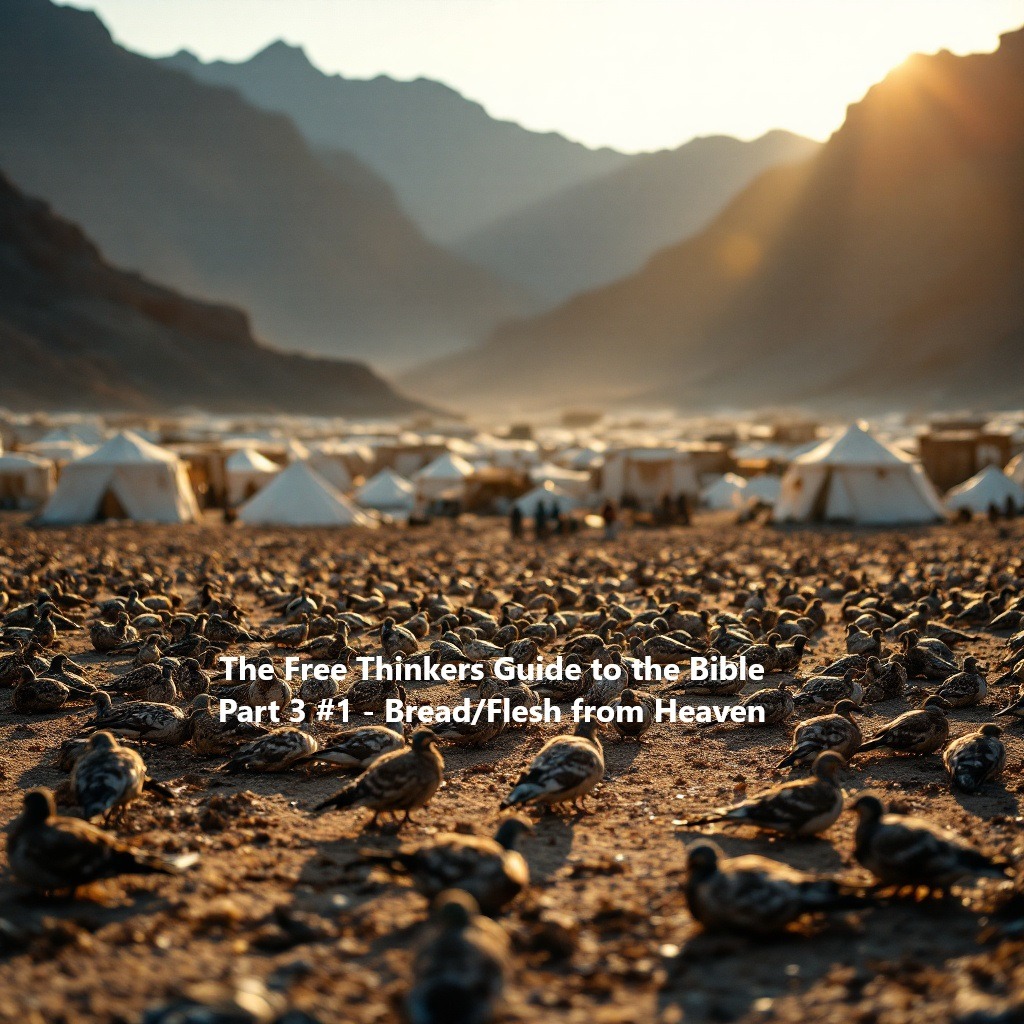
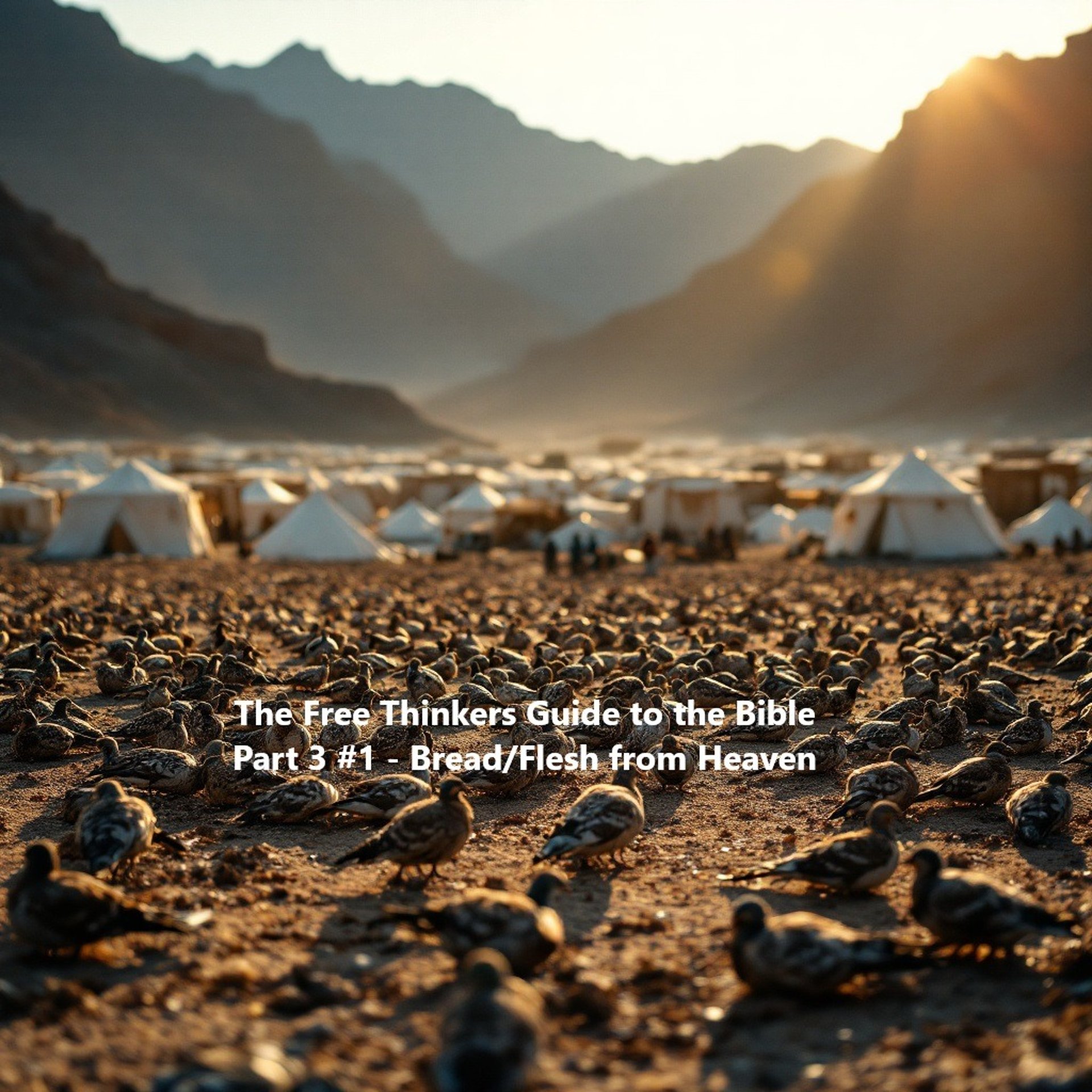
Our first example is two accounts of the same event written by different authors. The first version is in Exodus, with its counterpart residing in the book of Numbers. These are the accounts of the quail and manna from heaven.
Bread/Manna – Flesh/Quail from Heaven
One story/Two accounts
Before beginning, read Exodus chapter 16 and Numbers 11, Look for anything out of the ordinary and Jot down any questions that come to mind.
Bread from Heaven “A”
Exo 16:1 And they took their journey from Elim, and all the congregation of the children of Israel came unto the wilderness of Sin, which is between Elim and Sinai, on the fifteenth day of the second month after their departing out of the land of Egypt. 2 And the whole congregation of the children of Israel murmured against Moses and Aaron in the wilderness: 3 And the children of Israel said unto them, Would to God we had died by the hand of the LORD in the land of Egypt, when we sat by the flesh pots, and when we did eat bread to the full; for ye have brought us forth into this wilderness, to kill this whole assembly with hunger.
4 Then said the LORD unto Moses, Behold, I will rain bread from heaven for you; and the people shall go out and gather a certain rate every day, that I may prove them, whether they will walk in my law, or no. 5 And it shall come to pass, that on the sixth day they shall prepare that which they bring in; and it shall be twice as much as they gather daily.
6 And Moses and Aaron said unto all the children of Israel, At even, then ye shall know that the LORD hath brought you out from the land of Egypt: 7 And in the morning, then ye shall see the glory of the LORD; for that he heareth your murmurings against the LORD: and what are we, that ye murmur against us?
8 And Moses said, This shall be, when the LORD shall give you in the evening flesh to eat, and in the morning bread to the full; for that the LORD heareth your murmurings which ye murmur against him: and what are we? your murmurings are not against us, but against the LORD.
9 And Moses spake unto Aaron, Say unto all the congregation of the children of Israel, Come near before the LORD: for he hath heard your murmurings. 10 And it came to pass, as Aaron spake unto the whole congregation of the children of Israel, that they looked toward the wilderness, and, behold, the glory of the LORD appeared in the cloud.
11 And the LORD spake unto Moses, saying, 12 I have heard the murmurings of the children of Israel: speak unto them, saying, At even ye shall eat flesh, and in the morning ye shall be filled with bread; and ye shall know that I am the LORD your God.
13 And it came to pass, that at even the quails came up, and covered the camp: and in the morning the dew lay round about the host.
14 And when the dew that lay was gone up, behold, upon the face of the wilderness there lay a small round thing, as small as the hoar frost on the ground. 15 And when the children of Israel saw it, they said one to another, It is manna: for they wist not what it was. And Moses said unto them, this is the bread which the LORD hath given you to eat. 16 This is the thing which the LORD hath commanded, Gather of it every man according to his eating, an omer for every man, according to the number of your persons; take ye every man for them which are in his tents. 17 And the children of Israel did so, and gathered, some more, some less. 18 And when they did mete it with an omer, he that gathered much had nothing over, and he that gathered little had no lack; they gathered every man according to his eating.
19 And Moses said, Let no man leave of it till the morning. 20 Notwithstanding they hearkened not unto Moses; but some of them left of it until the morning, and it bred worms, and stank: and Moses was wroth with them. 21 And they gathered it every morning, every man according to his eating: and when the sun waxed hot, it melted.
22 And it came to pass, that on the sixth day they gathered twice as much bread, two omers for one man: and all the rulers of the congregation came and told Moses. 23 And he said unto them, this is that which the LORD hath said; to morrow is the rest of the holy Sabbath unto the LORD: bake that which ye will bake to day, and seethe that ye will seethe; and that which remaineth over lay up for you to be kept until the morning. 24 And they laid it up till the morning, as Moses bade: and it did not stink, neither was there any worm therein. 25 And Moses said, eat that to day; for to day is a Sabbath unto the LORD: to day ye shall not find it in the field. 26 Six days ye shall gather it; but on the seventh day, which is the Sabbath, in it there shall be none. 27 And it came to pass, that there went out some of the people on the seventh day for to gather, and they found none. 28 And the LORD said unto Moses, How long refuse ye to keep my commandments and my laws? 29 See, for that the LORD hath given you the sabbath, therefore he giveth you on the sixth day the bread of two days; abide ye every man in his place, let no man go out of his place on the seventh day. 30 So the people rested on the seventh day.
31 And the house of Israel called the name thereof Manna: and it was like coriander seed, white; and the taste of it was like wafers made with honey. 32 And Moses said, this is the thing which the LORD commandeth, fill an omer of it to be kept for your generations; that they may see the bread wherewith I have fed you in the wilderness, when I brought you forth from the land of Egypt. 33 And Moses said unto Aaron, Take a pot, and put an omer full of manna therein, and lay it up before the LORD, to be kept for your generations. 34 as the LORD commanded Moses, so Aaron laid it up before the Testimony, to be kept. 35 And the children of Israel did eat manna forty years, until they came to a land inhabited; they did eat manna, until they came unto the borders of the land of Canaan. 36 Now an omer is the tenth part of an ephah.
Observations
In verse two we read “the children of Israel murmured against Moses and Aaron” because they are hungry. They refer to the meat and bread they received in Egypt.
In this account we see Moses as the leader and intercessor with Aaron acting as the primary spokesman, the high priest and sharing the brunt of the murmuring of the children of Israel:
In verse six we read: “and Moses and Aaron said unto all the children of Israel”
In verse nine we read: “And Moses spake unto Aaron, Say unto all the congregation of the children of Israel”
In verse thirty-three and thirty-four we read: “33 And Moses said unto Aaron, Take a pot, and put an omer full of manna therein”, “34 as the LORD commanded Moses, so Aaron laid it up before the Testimony”
In verses twelve and thirteen we read that The Creator tells Moses that the children of Israel will eat flesh (quail) in the evening and when they rise in the morning they will have bread (manna).
12 I have heard the murmurings of the children of Israel: speak unto them, saying, At even ye shall eat flesh, and in the morning ye shall be filled with bread; and ye shall know that I am the LORD your God. 13 And it came to pass, that at even the quails came up, and covered the camp: and in the morning the dew lay round about the host.
The account focuses on Bread/Manna with only one reference to quail and a single reference to flesh. The writer overwhelmingly refers to the people as “the children of Israel”. The seventh day of rest is emphasized
Word Occurrences
Murmur - 8X – (לין - lı̂yn) (תּלנּה - telûnâh)
Bread - 8X – (לחם - lechem)
The seventh day Sabbath – 7X
Manna - 5X
Flesh - 1X - (בּשׂר - bâśâr)
Quail - 1X
Flesh from Heaven “B”
Num 11:1 And when the people complained, it displeased the LORD: and the LORD heard it; and his anger was kindled; and the fire of the LORD burnt among them, and consumed them that were in the uttermost parts of the camp. 2 And the people cried unto Moses; and when Moses prayed unto the LORD, the fire was quenched. 3 And he called the name of the place Taberah: because the fire of the LORD burnt among them.
4 And the mixt multitude that was among them fell a lusting: and the children of Israel also wept again, and said, who shall give us flesh to eat? 5 We remember the fish, which we did eat in Egypt freely; the cucumbers, and the melons, and the leeks, and the onions, and the garlick: 6a But now our soul is dried away.
6b there is nothing at all, beside this manna, before our eyes. 7 And the manna was as coriander seed, and the colour thereof as the colour of bdellium. 8 And the people went about, and gathered it, and ground it in mills, or beat it in a mortar, and baked it in pans, and made cakes of it: and the taste of it was as the taste of fresh oil. 9 And when the dew fell upon the camp in the night, the manna fell upon it.
10 Then Moses heard the people weep throughout their families, every man in the door of his tent: and the anger of the LORD was kindled greatly; Moses also was displeased. 11a And Moses said unto the LORD
11 And Moses said unto the LORD, Wherefore hast thou afflicted thy servant? and wherefore have I not found favour in thy sight, that thou layest the burden of all this people upon me? 12 Have I conceived all this people? have I begotten them, that thou shouldest say unto me, Carry them in thy bosom, as a nursing father beareth the sucking child, unto the land which thou swarest unto their fathers?
13 Whence should I have flesh to give unto all this people? for they weep unto me, saying, Give us flesh, that we may eat.
14 I am not able to bear all this people alone, because it is too heavy for me. 15 And if thou deal thus with me, kill me, I pray thee, out of hand, if I have found favour in thy sight; and let me not see my wretchedness. 16 And the LORD said unto Moses, Gather unto me seventy men of the elders of Israel, whom thou knowest to be the elders of the people, and officers over them; and bring them unto the tabernacle of the congregation, that they may stand there with thee. 17 And I will come down and talk with thee there: and I will take of the spirit which is upon thee, and will put it upon them; and they shall bear the burden of the people with thee, that thou bear it not thyself alone.
18 And say thou unto the people, Sanctify yourselves against to morrow, and ye shall eat flesh: for ye have wept in the ears of the LORD, saying, who shall give us flesh to eat? for it was well with us in Egypt: therefore the LORD will give you flesh, and ye shall eat. 19 Ye shall not eat one day, nor two days, nor five days, neither ten days, nor twenty days; 20 But even a whole month, until it come out at your nostrils, and it be loathsome unto you: because that ye have despised the LORD which is among you, and have wept before him, saying, Why came we forth out of Egypt?
21 And Moses said, the people, among whom I am, are six hundred thousand footmen; and thou hast said, I will give them flesh, that they may eat a whole month. 22 Shall the flocks and the herds be slain for them, to suffice them? or shall all the fish of the sea be gathered together for them, to suffice them? 23 And the LORD said unto Moses, Is the LORD'S hand waxed short? thou shalt see now whether my word shall come to pass unto thee or not.
24 And Moses went out, and told the people the words of the LORD, and gathered the seventy men of the elders of the people, and set them round about the tabernacle. 25 And the LORD came down in a cloud, and spake unto him, and took of the spirit that was upon him, and gave it unto the seventy elders: and it came to pass, that, when the spirit rested upon them, they prophesied (nâbâ), and did not cease. 26 But there remained two of the men in the camp, the name of the one was Eldad, and the name of the other Medad: and the spirit rested upon them; and they were of them that were written, but went not out unto the tabernacle: and they prophesied (nâbâ) in the camp. 27 And there ran a young man, and told Moses, and said, Eldad and Medad do prophesy (nâbâ) in the camp. 28 And Joshua the son of Nun, the servant of Moses, one of his young men, answered and said, My lord Moses, forbid them. 29 And Moses said unto him, Enviest thou for my sake? would God that all the LORD'S people were prophets, (nâbı̂y') and that the LORD would put his spirit upon them! 30 And Moses gat him into the camp, he and the elders of Israel.
Num 11:31 And there went forth a wind from the LORD, and brought quails from the sea, and let them fall by the camp, as it were a day's journey on this side, and as it were a day's journey on the other side, round about the camp, and as it were two cubits high upon the face of the earth. 32 And the people stood up all that day, and all that night, and all the next day, and they gathered the quails: he that gathered least gathered ten homers: and they spread them all abroad for themselves round about the camp. 33 And while the flesh was yet between their teeth, ere it was chewed, the wrath of the LORD was kindled against the people, and the LORD smote the people with a very great plague (מכּה makkâh). 34 And he called the name of that place Kibrothhattaavah: because there they buried the people that lusted. 35 And the people journeyed from Kibrothhattaavah unto Hazeroth; and abode at Hazeroth.
Observations
In this account Moses is the leader and intercessor. There is no mention of Aaron, the priesthood or priestly rites.
In verse one, we read “and when the people complained” (Because they were hungry?) The Creator sends a fire at the edges of the camp and consumed them. This event occurred at Taberah.
In verse four and five we read “4 and the mixt multitude that was among them fell a lusting: and the children of Israel also wept again, and said, who shall give us flesh to eat? 5 We remember the fish, which we did eat in Egypt freely; the cucumbers, and the melons, and the leeks, and the onions, and the garlick:
” This is similar to the “A” account as the people desired the food that they had when they were in Egypt.
The Creator sent flesh/quail in abundance and the people eat. Many die from consuming the flesh.
The account focuses on Flesh/Quail.
The name of this location is Kibrothhattaavah. The writer overwhelmingly refers to the children of Israel as “the people”.
Note: Deuteronomy nine refers to both of the locations mentioned in this account… Deu 9:22 And at Taberah, and at Massah, and at Kibrothhattaavah, ye provoked the LORD to wrath.
Word Occurrences
Complained - 1X
Lusted – 1X
Weep/wept – 5X
Bread - 0X – (לחם - lechem)
Manna - 0X 3X in “A” scribal additions
Flesh - 7X - (בּשׂר - bâśâr) 1X in “A” scribal addition
Quail - 2X
Comparisons
Account “A” features Moses and Aaron
Account “B” features Moses alone
Account “A” focuses on Bread/Manna and barely mentions Flesh/Quail
Account “B” focuses on Flesh/Quail and only mentions Manna and doesn’t reference Bread at all.
In Account “A” the Children of Israel murmur
In Account “B” the People weep
Account “A” refers to the people as: “The children of Israel” - 10X and “The People” – 3X
Account “B” refers to the people as: “The People “- 13X and “The children of Israel” – 1X
Note: Manna is referred to only ten times in the first five books of the bible. (3) Times in the Numbers eleven “B” account. (5) Times in the Exodus sixteen “A” account, and two times in Deuteronomy chapter eight.
Analysis
With all of the differences between the accounts you need to ask yourself; What if one of the accounts is an original and the other is an addition? You need to use the skills you have learned to answer this question.
Which account makes more sense given the information we have accumulated?
I propose to you that based on the accumulated evidence, Account “B” is an original and older account. We only have to reconcile the scribal insertions that were interwoven into the “B” account.
The three priestly additions in the account
Manna
6b there is nothing at all, beside this manna, before our eyes. 7 And the manna was as coriander seed, and the colour thereof as the colour of bdellium. 8 And the people went about, and gathered it, and ground it in mills, or beat it in a mortar, and baked it in pans, and made cakes of it: and the taste of it was as the taste of fresh oil. 9 And when the dew fell upon the camp in the night, the manna fell upon it.
This addition would have you believe that the manna is not something new, and that the manna has become tiresome to eat. This would direct your attention to the Exodus sixteen account to confirm that manna had been given to the people for food while they traveled in the Wilderness. Who would suspect such a change? Without the short scribal addition there is no mention of manna and the Quail story flows seamlessly as it was originally written.
Numbers 11:11 And Moses said unto the LORD, Wherefore hast thou afflicted thy servant? and wherefore have I not found favour in thy sight, that thou layest the burden of all this people upon me? 12 Have I conceived all this people? have I begotten them, that thou shouldest say unto me, Carry them in thy bosom, as a nursing father beareth the sucking child, unto the land which thou swarest unto their fathers? ***
14 I am not able to bear all this people alone, because it is too heavy for me. 15 And if thou deal thus with me, kill me, I pray thee, out of hand, if I have found favour in thy sight; and let me not see my wretchedness. 16 And the LORD said unto Moses, Gather unto me seventy men of the elders of Israel, whom thou knowest to be the elders of the people, and officers over them; and bring them unto the tabernacle of the congregation, that they may stand there with thee. 17 And I will come down and talk with thee there: and I will take of the spirit which is upon thee, and will put it upon them; and they shall bear the burden of the people with thee, that thou bear it not thyself alone. ***
24 And Moses went out, and told the people the words of the LORD, and gathered the seventy men of the elders of the people, and set them round about the tabernacle. 25 And the LORD came down in a cloud, and spake unto him, and took of the spirit that was upon him, and gave it unto the seventy elders: and it came to pass, that, when the spirit rested upon them, they prophesied (nâbâ'), and did not cease. 26 But there remained two of the men in the camp, the name of the one was Eldad, and the name of the other Medad: and the spirit rested upon them; and they were of them that were written, but went not out unto the tabernacle: and they prophesied (nâbâ') in the camp. 27 And there ran a young man, and told Moses, and said, Eldad and Medad do prophesy (nâbâ') in the camp. 28 And Joshua the son of Nun, the servant of Moses, one of his young men, answered and said, My lord Moses, forbid them. 29 And Moses said unto him, Enviest thou for my sake? would God that all the LORD'S people were prophets, (nâbı̂y') and that the LORD would put his spirit upon them! 30 And Moses gat him into the camp, he and the elders of Israel.
This insertion can best be explained by viewing – “The Elders study”.
Moses questioned the ability of the Lord to feed the people
21 And Moses said, the people, among whom I am, are six hundred thousand footmen; and thou hast said, I will give them flesh, that they may eat a whole month. 22 Shall the flocks and the herds be slain for them, to suffice them? or shall all the fish of the sea be gathered together for them, to suffice them? 23 And the LORD said unto Moses, Is the LORD'S hand waxed short? thou shalt see now whether my word shall come to pass unto thee or not.
In this addition; Moses was instructed by the Lord to tell the people that he would give them meat to eat in great excess. Moses cast doubt on the possibility that He could provide enough food to feed six-hundred thousand + people. The Lord then rebuked Moses for his lack of faith.
This addition performs two functions: It defines the number of Israelites and Mixed multitude that were traveling in the wilderness and it casts Moses in a negative light.
(We know from the previous studies that the use of names, dates, numbers, weights, measures and presenting Moses in a negative light are a common occurrence in the priestly writings).
Flesh from Heaven “B” - priestly insertions removed
Num 11:1 And when the people complained, it displeased the LORD: and the LORD heard it; and his anger was kindled; and the fire of the LORD burnt among them, and consumed them that were in the uttermost parts of the camp. 2 And the people cried unto Moses; and when Moses prayed unto the LORD, the fire was quenched. 3 And he called the name of the place Taberah: because the fire of the LORD burnt among them.
4 And the mixt multitude that was among them fell a lusting: and the children of Israel also wept again, and said, who shall give us flesh to eat? 5 We remember the fish, which we did eat in Egypt freely; the cucumbers, and the melons, and the leeks, and the onions, and the garlick: 6a But now our soul is dried away. *** 10 Then Moses heard the people weep throughout their families, every man in the door of his tent: and the anger of the LORD was kindled greatly; Moses also was displeased. 11a And Moses said unto the LORD *** 13 Whence should I have flesh to give unto all this people? for they weep unto me, saying, Give us flesh, that we may eat.
*** 16 And the LORD said unto Moses, *** 18 And say thou unto the people, Sanctify yourselves against to morrow, and ye shall eat flesh: for ye have wept in the ears of the LORD, saying, who shall give us flesh to eat? for it was well with us in Egypt: therefore the LORD will give you flesh, and ye shall eat. 19 Ye shall not eat one day, nor two days, nor five days, neither ten days, nor twenty days; 20 But even a whole month, until it come out at your nostrils, and it be loathsome unto you: because that ye have despised the LORD which is among you, and have wept before him, saying, Why came we forth out of Egypt? ***
31 And there went forth a wind from the LORD, and brought quails from the sea, and let them fall by the camp, as it were a day's journey on this side, and as it were a day's journey on the other side, round about the camp, and as it were two cubits high upon the face of the earth. 32 And the people stood up all that day, and all that night, and all the next day, and they gathered the quails: he that gathered least gathered ten homers: and they spread them all abroad for themselves round about the camp. 33 And while the flesh was yet between their teeth, ere it was chewed, the wrath of the LORD was kindled against the people, and the LORD smote the people with a very great plague (מכּה makkâh). 34 And he called the name of that place Kibrothhattaavah: because there they buried the people that lusted. 35 And the people journeyed from Kibrothhattaavah unto Hazeroth; and abode at Hazeroth.
Questions left to be answered
Why did the scribe(s) want to elevate Aaron?
Why did the scribe(s) want to insert manna into this account?
Why did the scribe(s) insert the ‘Seventy Elders’ account within this story?
We will seek the answer to these questions in the future studies in the series.
Please continue on with us in the series…
Part 3 #2 - The Waters of Meribah
All of the material on this site is the product of my twenty-five years of research and study in the fields of Middle Eastern history, archeology (focusing on the Levant), biblical theology, (the study of the Christian, Judaic and Islamic religions), linguistics (I have studied the Hebrew and Greek languages in order to gain the original writers perspectives). I have personal experience with the following faiths: Southern Baptist, WWCG, CGI, Messianic Judaism and Judaism I lived in a torah based monotheist community based on humanist teachings and values for several years. I have been writing studies/articles and parables since the early 2000s. I published many of my works on the www.YHWHisEl.com site at that time; with a focus on monotheism and the non deity of Jesus (Yehoshua).
After identifying many peculiarities in the TaNaKh while teaching, I tasked myself with determining the source of the inconsistencies. I began my search in the first five books of the bible. I read through them many times, locating inconsistencies and attempting to find the golden key that would unlock them. I read many articles, publications and books in which the authors attempted to explain the irregularities (most based on a version of the JDEP theory) and I tested each against the inconsistencies and all of them failed to provide a viable answer.
I then used critical thinking and tested potential theories until I finally found the solution that solved every problematic area. The Free thinkers guide to the Bible is the culmination of this process.
I only use AI for images on this site; I did not use it to reach my conclusion and I do not use it to write or structure my material. I do not condone AI scraping or any other form of theft of intellectual property.
If you choose to share the information I present; please be courteous and give credit to this site and myself (the author).
Author: Hoyt Allen Spiker - 2024 - Shemoth20@Gmail.com