
The Freethinkers guide to the bible
Part 5 #4 - Phinehas, Man or Myth?
Welcome back to the Free Thinkers guide to the bible. I created this series so that ‘anyone’ can explore and understand the bible. You don’t need to be a biblical scholar; all you need is a desire to see what is written. I will present to you several biblical examples and demonstrate the process of sifting the accounts to reveal the hidden. This process is very similar to archeology, where the layers are excavated and analyzed.
Just not the dirty part, though you will be digging up some dirt along the way.
The series provides you with numerous examples of two distinct groups of scribal authors/redactors.
The first group is the "A" authors/redactors who focus on priestly matters; laws, rules and observances, as well as the tabernacle/temple services and offerings. The "A" authors and writing styles range from literary artisans to unskilled writers whose works are easily identified.
The second group consists of the “B” and “D” author(s)/redactor(s).
The “D” author/redactor chronicles the first person Moses account of the wilderness travels.
The “B” author(s)/redactor(s) wrote the stories in Genesis; Israel’s time in Egypt and the wilderness travels in Exodus and Numbers.
The “B” wilderness accounts in Exodus and Numbers harmonize with the “D” author’s first person Moses accounts; and is the reason they are grouped together.
In the study we compare the accounts and explore the differences between them to determine why the "A" priestly authors/redactors intentionally created similar yet separate accounts of many of the “B” author(s)/redactors stories.
The objective of this study is to present to you the original “B” writers Numbers account. It is not a perfect rendering, but It is very close to the original account. The Deuteronomist associated Numbers “B” account focuses on Moses continuing to lead the people to the promised land and the events that occur during their travels after leaving Mount Horeb. The account does not focus on religious rites, rituals, laws or objects.
*** - Placed where priestly "A" writer accounts occur or where likely "A" redactor additions occur
Underlined portions contain clickable links to the associated Freethinkers studies
Phinehas, Man or Myth
In this study we ask the question: “Are the “A” writers accounts that feature Phinehas the son of Eleazar the priest, the son of Aaron the priest; fact or fiction”?
In our previous study “Aaron, High priest or leader of the people” we found that Aaron was a leader of the people with no priestly role in the Deuteronomist associated “B” writers accounts.
We found that Aaron’s sons Nadab and Abihu were possibly created by the “A” account writers to serve as sacrificial lambs in “The perpetual priesthood” study.
We found in “The covenant of peace” study that there are only three “A” writer accounts that feature Phinehas the son of Eleazar the priest in the first five scrolls of the bible; with no mentions of him in the “B” writer’s accounts. The study briefly touched on a Midianite connection with Phinehas in the accounts.
In this study we will fully explore the Phinehas and Midianite association to answer the question: Did the “A” writers fabricate the accounts (and possibly Phinehas) in an effort to establish an ‘eternal’ Aaronid High priesthood through the Eleazar lineage?
Who were the Midianites?
We need to understand their culture and explore their relations with the Amorites. Let’s begin with three examples that reveal the Midianite civilization…
Midianites – Bedouin – nomads
Jdg 6:2 And the hand of Midian prevailed against Israel: and because of the Midianites the children of Israel made them the dens which are in the mountains, and caves, and strong holds. 3 And so it was, when Israel had sown, that the Midianites came up, and the Amalekites, and the children of the east, even they came up against them; 4 And they encamped against them, and destroyed the increase of the earth, till thou come unto Gaza, and left no sustenance for Israel, neither sheep, nor ox, nor ass. 5 For they came up with their cattle and their tents, and they came as grasshoppers for multitude; for both they and their camels were without number: and they entered into the land to destroy it.
In the Judges account we read that the Midianites came upon the Israelites with their cattle and tents and there were camels beyond numbering. This tells us that the Midianites were tent dwellers and herders who kept numerous camels. This should give you a clear picture that the Midianites were a nomadic people. Let’s look further…
Hab 3:6 He stood, and measured the earth: he beheld, and drove asunder the nations; and the everlasting mountains were scattered, the perpetual hills did bow: his ways are everlasting. 7 I saw the tents of Cushan in affliction: and the curtains of the land of Midian did tremble.
This prophecy in Habakkuk states that the Midianites lived in dwellings that had curtains for walls. This is another picture of the Midianites being a nomadic people. Now for a third witness…
Isa 60:6 the multitude of camels shall cover thee, the dromedaries of Midian and Ephah; all they from Sheba shall come: they shall bring gold and incense; and they shall shew forth the praises of the LORD.
In the prophecy in Isaiah we once again see the Midianites prominently pictured as tenders of camels.
If you are inclined please study and compare the biblical Midianites to the Bedouin. Both originated, lived and travelled in the same areas, have 'curtained' tent dwelling, camels and herding as prominent characteristics.
Notes: Midian/Midianites are not mentioned anywhere in the Deuteronomy scroll.
The only mention of Midian/Midianites in the “B” Exodus account is when the writers refer to Moses’ time in the land of Midian after fleeing Egypt and when referring to Jethro.
The Midianites are only mentioned two times in the “B” Numbers account (when speaking of the Midianite elders that dwelt among the Moabites in the Chapter twenty-two Balak/Balaam account).
The Amorites
The list “B”
There are several examples in the “B” writer’s accounts of a list of six groups of people that inhabited the land that the Israelites would inherit. The Amorites are one of those peoples…
(The people were required to recite this list every evening before going to sleep – This is humor for the GoT fans)
Exo 3:7 And the LORD said, I have surely seen the affliction of my people which are in Egypt, and have heard their cry by reason of their taskmasters; for I know their sorrows; 8 And I am come down to deliver them out of the hand of the Egyptians, and to bring them up out of that land unto a good land and a large, unto a land flowing with milk and honey; unto the place of the Canaanites, and the Hittites, and the Amorites, and the Perizzites, and the Hivites, and the Jebusites.
Exo 3:16 Go, and gather the elders of Israel together, and say unto them, The LORD God of your fathers, the God of Abraham, of Isaac, and of Jacob, appeared unto me, saying, I have surely visited you, and seen that which is done to you in Egypt: 17 And I have said, I will bring you up out of the affliction of Egypt unto the land of the Canaanites, and the Hittites, and the Amorites, and the Perizzites, and the Hivites, and the Jebusites, unto a land flowing with milk and honey.
Exo 23:23 For mine Angel (messenger) shall go before thee, and bring thee in unto the Amorites, and the Hittites, and the Perizzites, and the Canaanites, the Hivites, and the Jebusites: and I will cut them off. 24 Thou shalt not bow down to their gods, nor serve them, nor do after their works: but thou shalt utterly overthrow them, and quite break down their images.
Note: The Midianites are not on ‘the list’. We can discern the reason for this by using the knowledge we gained earlier. The Midianites were herders and tent dwellers. They didn’t dwell in cities; they travelled from place to place feeding their flocks where vegetation grew. Thus they had no territory of their own and lived amongst the Moabites, Amorites etc.
The Amorites “B”
Num 21:21 And Israel sent messengers unto Sihon king of the Amorites, saying, 22 Let me pass through thy land: we will not turn into the fields, or into the vineyards; we will not drink of the waters of the well: but we will go along by the king's high way, until we be past thy borders. 23 And Sihon would not suffer Israel to pass through his border: but Sihon gathered all his people together, and went out against Israel into the wilderness: and he came to Jahaz, and fought against Israel. 24 And Israel smote him with the edge of the sword, and possessed his land from Arnon unto Jabbok, even unto the children of Ammon: for the border of the children of Ammon was strong. 25 And Israel took all these cities: and Israel dwelt in all the cities of the Amorites, in Heshbon, and in all the villages thereof. 26 For Moab, and taken all his land out of his hand, even unto Arnon.
In this account we read that King Sihon of the Amorites would not allow Israel to pass through their land. He brought his armies against them and lost his life and his land for his stubbornness. The Israelites then dwelled in the cities they conquered.
The Amorites “D” firsthand Moses account
Deu 2:26 And I sent messengers out of the wilderness of Kedemoth unto Sihon king of Heshbon with words of peace, saying, 27 Let me pass through thy land: I will go along by the high way, I will neither turn unto the right hand nor to the left.
28 Thou shalt sell me meat for money, that I may eat; and give me water for money, that I may drink: only I will pass through on my feet; 29 (As the children of Esau which dwell in Seir, and the Moabites which dwell in Ar, did unto me;) until I shall pass over Jordan into the land which the LORD our God giveth us. 30 But Sihon king of Heshbon would not let us pass by him: for the LORD thy God hardened his spirit, and made his heart obstinate, that he might deliver him into thy hand, as appeareth this day. 31 And the LORD said unto me, Behold, I have begun to give Sihon and his land before thee: begin to possess, that thou mayest inherit his land. 32 Then Sihon came out against us, he and all his people, to fight at Jahaz. 33 And the LORD our God delivered him before us; and we smote him, and his sons, and all his people. 34 And we took all his cities at that time, and utterly destroyed the men, and the women, and the little ones, of every city, we left none to remain: 35 Only the cattle we took for a prey unto ourselves, and the spoil of the cities which we took. 36 From Aroer, which is by the brink of the river of Arnon, and from the city that is by the river, even unto Gilead, there was not one city too strong for us: the LORD our God delivered all unto us: 37 Only unto the land of the children of Ammon thou camest not, nor unto any place of the river Jabbok, nor unto the cities in the mountains, nor unto whatsoever the LORD our God forbad us.
The firsthand Moses account mirrors the “B” writer’s account of the Israelite encounter with the Amorites.
The list “D”
Deu 7:1 When the LORD thy God shall bring thee into the land whither thou goest to possess it, and hath cast out many nations before thee, the Hittites, and the Girgashites, and the Amorites, and the Canaanites, and the Perizzites, and the Hivites, and the Jebusites, seven nations greater and mightier than thou;
Deu 20:17 But thou shalt utterly destroy them; namely, the Hittites, and the Amorites, the Canaanites, and the Perizzites, the Hivites, and the Jebusites; as the LORD thy God hath commanded thee:
We have two places in Deuteronomy that contain ‘The List’. The first list adds a seventh nation; The Girgashites. The Midianites are not on the “D” writers list.
So far we have learned that the Midianites were a nomadic people who had flocks and camels and lived in tents. The Amorites were on ‘the list’ of nations whose lands would be possessed by the Israelites. That the Amorites (King Sihon) refused to let the Israelites pass through their land and were conquered and their land and possessions were taken by the Israelites.
We now turn to the priestly "A" writers accounts to read their accounts regarding the Midianites…
Num 25:1 And Israel abode in Shittim, ***
Numbers 25:6 And, behold, one of the children of Israel came and brought unto his brethren a Midianitish woman in the sight of Moses, and in the sight of all the congregation of the children of Israel, who were weeping before the door of the tabernacle of the congregation.
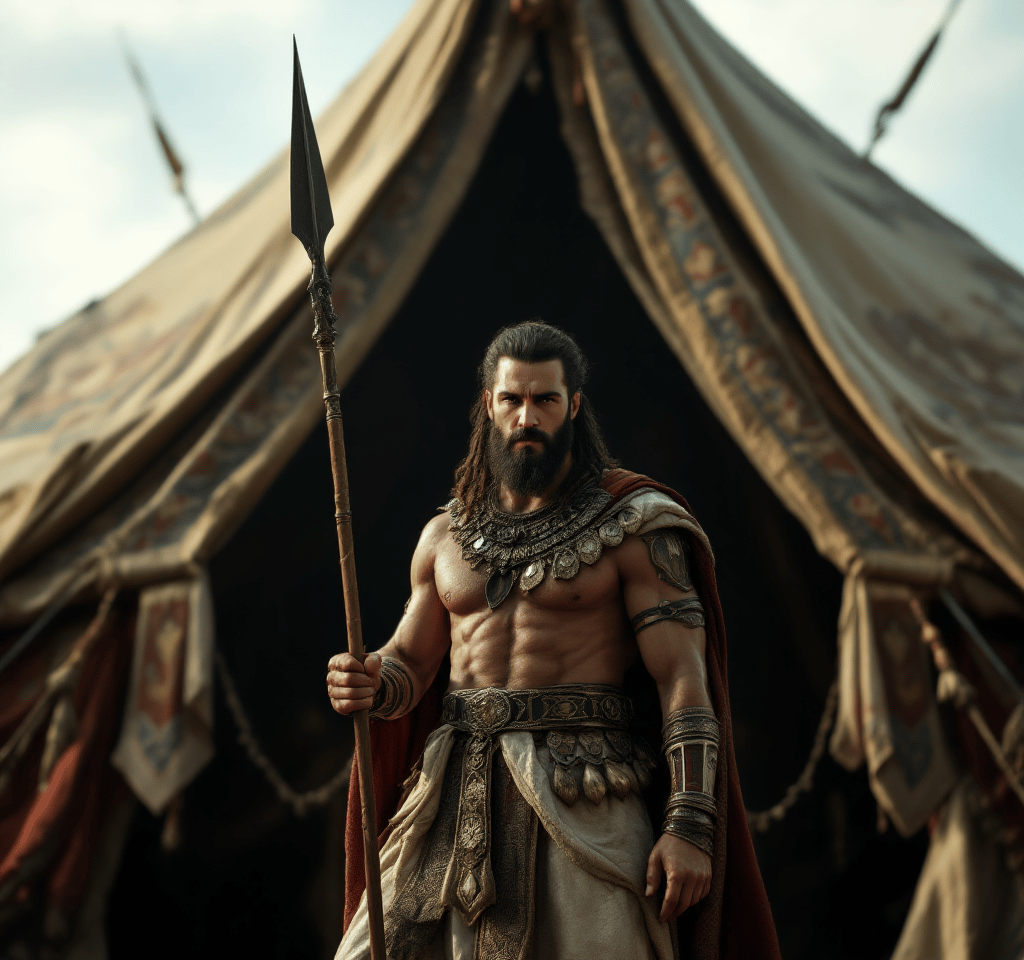
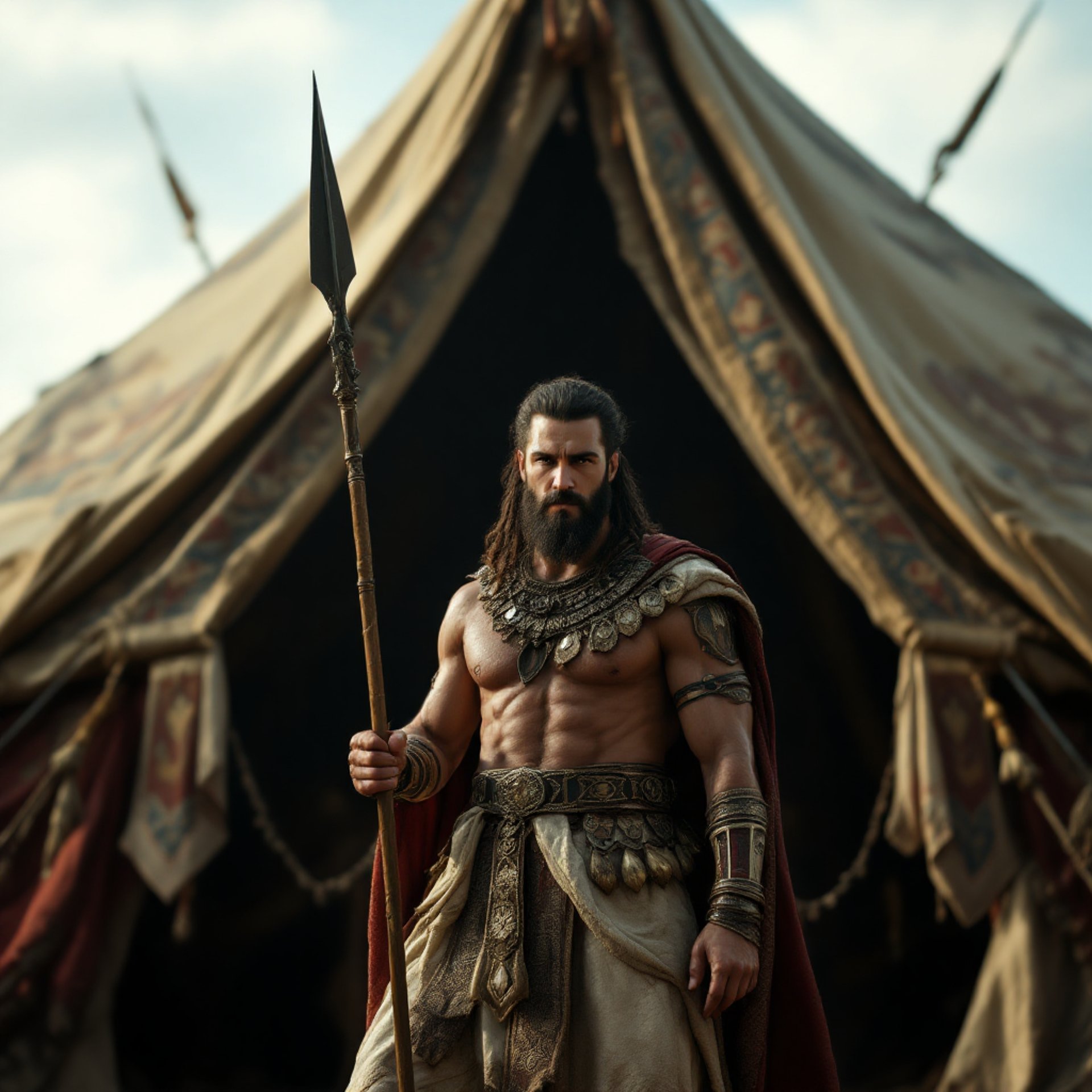
7 And when Phinehas, the son of Eleazar, the son of Aaron the priest, saw it, he rose up from among the congregation, and took a javelin in his hand; 8 And he went after the man of Israel into the tent, and thrust both of them through, the man of Israel, and the woman through her belly. So the plague was stayed from the children of Israel. 9 And those that died in the plague were twenty and four thousand.
10 And the LORD spake unto Moses, saying, 11 Phinehas, the son of Eleazar, the son of Aaron the priest, hath turned my wrath away from the children of Israel, while he was zealous for my sake among them, that I consumed not the children of Israel in my jealousy. 12 Wherefore say, Behold, I give unto him my covenant of peace: 13 and he shall have it, and his seed after him, even the covenant of an everlasting priesthood; because he was zealous for his God, and made an atonement for the children of Israel.
14 Now the name of the Israelite that was slain, even that was slain with the Midianitish woman, was Zimri, the son of Salu, a prince of a chief house among the Simeonites. 15 And the name of the Midianitish woman that was slain was Cozbi, the daughter of Zur; he was head over a people, and of a chief house in Midian. 16 And the LORD spake unto Moses, saying, 17 Vex the Midianites, and smite them: 18 For they vex you with their wiles, wherewith they have beguiled you in the matter of Peor, and in the matter of Cozbi, the daughter of a prince of Midian, their sister, which was slain in the day of the plague for Peor's sake.
Num 26:1 And it came to pass after the plague, that the LORD spake unto Moses and unto Eleazar the son of Aaron the priest, saying, 2 Take the sum of all the congregation of the children of Israel, from twenty years old and upward, throughout their fathers' house, all that are able to go to war in Israel. 3 And Moses and Eleazar the priest spake with them in the plains of Moab by Jordan near Jericho, saying, 4 Take the sum of the people, from twenty years old and upward; as the LORD commanded Moses and the children of Israel, which went forth out of the land of Egypt.
In this account Cozbi the daughter of Zur (a Midianite leader) was slain by Phinehas for defiling the tabernacle of the congregation. A plague broke out (because of the tabernacle defilement?) and killed twenty-four thousand people. The Lord gave Phinehas a covenant of peace and an everlasting priesthood (throughout his generations?). The Lord then instructed Moses to war against the Midianites because they used wile and guile against them (in the matter of Peor and Cozbi).
Before we continue in the Numbers scroll we need to view an “A” account in the Joshua scroll that provides some critical background information regarding the Midianites and Amorites…
The Inheritance East of the Jordan “A”
Joshua 13:15 And Moses gave unto the tribe of the children of Reuben inheritance according to their families. 16 And their coast was from Aroer, that is on the bank of the river Arnon, and the city that is in the midst of the river, and all the plain by Medeba; 17 Heshbon, and all her cities that are in the plain; Dibon, and Bamothbaal, and Bethbaalmeon, 18 And Jahazah, and Kedemoth, and Mephaath, 19 And Kirjathaim, and Sibmah, and Zarethshahar in the mount of the valley, 20 And Bethpeor, and Ashdothpisgah, and Bethjeshimoth,
21 And all the cities of the plain, and all the kingdom of Sihon king of the Amorites, which reigned in Heshbon, whom Moses smote with the princes of Midian, Evi, and Rekem, and Zur, and Hur, and Reba, which were dukes of Sihon, dwelling in the country. 22 Balaam also the son of Beor, the soothsayer, did the children of Israel slay with the sword among them that were slain by them.
According to the Joshua account; not only were the Amorites defeated, but the Midianites that were living in the Amorite territories were also destroyed. The writer states that the Midianites were “dwelling” in the land of the Amorites. Make note that according to this account the Midianite King/Prince Zur was killed at that time! This is Zur the Midianite leader and father of Cozbi who is named in the "A" priestly writer’s account of the ‘Heresy at Peor’.
With this information we might conclude that the Midianites were dwelling in the lands of King Sihon as tent dwellers and flock herders who used camels for transportation; (Bedouin) and that they were conquered at the same time as the Amorites.
However: This conclusion isn’t supported by the “B” or “D” writer’s accounts. (There is no mention of the Midianites in either).
We also have a conflict in the next account that involves the Midianites in the Numbers scroll.
Six chapters later, after the census account, the matter of the daughters of Zelophehad, the preliminary passing of authority from Moses to Joshua, two chapters on the priestly offerings and a chapter regarding vows we come to chapter thirty-one where Moses is tasked by the Creator to “avenge” Him and war against the Midianites…
Vengeance on Midian “A”
Num 31:1 And the LORD spake unto Moses, saying, 2 Avenge the children of Israel of the Midianites: afterward shalt thou be gathered unto thy people. 3 And Moses spake unto the people, saying, Arm some of yourselves unto the war, and let them go against the Midianites, and avenge the LORD of Midian. 4 Of every tribe a thousand, throughout all the tribes of Israel, shall ye send to the war. 5 So there were delivered out of the thousands of Israel, a thousand of every tribe, twelve thousand armed for war. 6 And Moses sent them to the war, a thousand of every tribe, them and Phinehas the son of Eleazar the priest, to the war, with the holy instruments, and the trumpets to blow in his hand. 7 And they warred against the Midianites, as the LORD commanded Moses; and they slew all the males. 8 And they slew the kings of Midian, beside the rest of them that were slain; namely, Evi, and Rekem, and Zur, and Hur, and Reba, five kings of Midian: Balaam also the son of Beor they slew with the sword. 9 And the children of Israel took all the women of captives, and their little ones, and took the spoil of all their cattle, and all their flocks, and all their goods.
10 And they burnt all their cities wherein they dwelt, and all their goodly castles, with fire. 11 And they took all the spoil, and all the prey, both of men and of beasts. 12 And they brought the captives, and the prey, and the spoil, unto Moses, and Eleazar the priest, and unto the congregation of the children of Israel, unto the camp at the plains of Moab, which are by Jordan near Jericho.
In this "A" account we have Moses gathering the people for war against the Midianites (no mention of Amorites, King Sihon or Heshbon). Phinehas the hero priest and son of Eleazar the high priest is tasked with carrying the holy instruments into the battles. The Midianite king/prince Zur is killed at this time.
Note: The priestly "A" writers claim that the nomadic Midianites were dwelling in cities and walled fortresses in this account. They do not specify what land the Midianites were dwelling in.
What we know
Midian/Midianites are not mentioned in the Deuteronomy scroll.
The Midianites were a nomadic people who dwelled in tents, tended flocks and camels and lived amongst the nations.
The “B”& “D” writers share the same list of six nations that would be conquered by the Israelites. (The Midianites are not on the list)
The “B”& “D” writers share the same version of the conquering of the Amorites, King Sihon and Heshbon. (The Midianites are not mentioned)
The Joshua scroll states that the Amorites and Midianites were conquered at the same time.
The "A" writers account state that the Midianites were conquered and their cities and walled places (castles) were destroyed. The Midianite kings including Zur, father of Cozbi were killed along with Balaam (who was from Mesopotamia and performed his ‘seeing’ for the Moabites).
Conclusions
With the information we have compiled we definitely see a contradiction between the “B”& “D” and priestly "A" writers accounts. We also see several irregularities regarding the Midianites in the "A" writers account.
Is it possible that the "A" writers fabricated the Heresy at Peor and the destruction of the Midianites accounts in order to portray Phinehas as: The son of Eleazar, son of Aaron, Hero slayer of the heretics at the tabernacle of the congregation, plague breaker, zealous for the Lord, receiver of the covenant of shalom, receiver of the everlasting priesthood, carrier of the trumpets (with his father the high priest) during the battles against the Midianites!
These two accounts elevated Phinehas the hero priest and the Aaronid priesthood (the lineage of Eleazar) forever… all in two short accounts!
Psalm 106:28 They joined themselves also unto Baalpeor, and ate the sacrifices of the dead. 29 Thus they provoked him to anger with their inventions: and the plague brake in upon them. 30 Then stood up Phinehas, and executed judgment: and so the plague was stayed. 31 And that was counted unto him for righteousness unto all generations for evermore.
You have the evidence of this study and many previous studies. The answer should be clear.
As always, I leave you to ponder the evidence and do with it as you see fit.
All of the material on this site is the product of my twenty-five years of research and study in the fields of Middle Eastern history, archeology (focusing on the Levant), biblical theology, (the study of the Christian, Judaic and Islamic religions), linguistics (I have studied the Hebrew and Greek languages in order to gain the original writers perspectives). I have personal experience with the following faiths: Southern Baptist, WWCG, CGI, Messianic Judaism and Judaism I lived in a torah based monotheist community based on humanist teachings and values for several years. I have been writing studies/articles and parables since the early 2000s. I published many of my works on the www.YHWHisEl.com site at that time; with a focus on monotheism and the non deity of Jesus (Yehoshua).
After identifying many peculiarities in the TaNaKh while teaching, I tasked myself with determining the source of the inconsistencies. I began my search in the first five books of the bible. I read through them many times, locating inconsistencies and attempting to find the golden key that would unlock them. I read many articles, publications and books in which the authors attempted to explain the irregularities (most based on a version of the JDEP theory) and I tested each against the inconsistencies and all of them failed to provide a viable answer.
I then used critical thinking and tested potential theories until I finally found the solution that solved every problematic area. The Free thinkers guide to the Bible is the culmination of this process.
I only use AI for images on this site; I did not use it to reach my conclusion and I do not use it to write or structure my material.
I do not condone AI scraping or any other form of theft of intellectual property.
If you choose to share the information I present; please be courteous and give credit to this site and myself (the author).
Author: Hoyt Allen Spiker - 2026 - Shemoth20@Gmail.com