
The Free Thinkers guide to the Bible
Welcome back to the Free Thinkers guide to the bible. I created this series so that ‘anyone’ can explore and understand the bible. You don’t need to be a biblical scholar; all you need is a desire to see what is written. I will present to you several biblical examples and demonstrate the process of sifting the accounts to reveal the hidden. This process is very similar to archeology, where the layers are excavated and analyzed. Just not the dirty part, though you will be digging up some dirt along the way.
Warning:
The series unfolds like a story in a book. Please study the content in the order it is presented in order to have the best experience. The study series begins with Part 1 #1 – The Flood
The series provides you with numerous examples of two distinct groups of scribal authors/redactors.
The first group is the "A" authors/redactors who focus on priestly matters; laws, rules and observances, as well as the tabernacle/temple services and offerings. The "A" authors and writing styles range from literary artisans to unskilled writers whose works are easily identified.
The second group consists of the “B” and “D” author(s)/redactor(s).
The “D” author/redactor chronicles the first person Moses account of the wilderness travels.
The “B” author(s)/redactor(s) wrote the stories in Genesis; Israel’s time in Egypt and the wilderness travels in Exodus and Numbers.
The “B” wilderness accounts harmonize with the “D” author’s first person Moses accounts; and is the reason they are grouped together.
In the study we compare the accounts and explore the differences between them to determine why the "A" priestly authors/redactors intentionally created similar yet separate accounts of many of the “B” author(s)/redactors stories.
The Waters of Meribah – Two accounts
Preface
Our next study is two accounts of the same event written by different authors. The first version is in Numbers, with its counterpart residing in the book of Exodus. This is the well known account of Moses bringing water out of a rock.
Before beginning, read Numbers chapter 20:1 – 13 and Exodus 17:1-7, Look for anything out of the ordinary and Jot down any questions that come to mind.
We will go through the biblical account and identify areas that should be investigated. This exercise will give you practice in spotting anomalies in future studies and when you read portions of the bible that are not covered in this series. Also look for word and subject repetitions.
One story, two accounts - The Waters of Meribah “A”
Num 20:2 And there was no water for the congregation: and they gathered themselves together against Moses and against Aaron. 3 And the people chode with Moses, and spake, saying, would God that we had died when our brethren died before the LORD! (יהוה) 4 and why have ye brought up the congregation of the LORD (יהוה) into this wilderness, that we and our cattle should die there? 5 And wherefore have ye made us to come up out of Egypt, to bring us in unto this evil place? It is no place of seed, or of figs, or of vines, or of pomegranates; neither is there any water to drink. 6 And Moses and Aaron went from the presence of the assembly unto the door of the tabernacle of the congregation, and they fell upon their faces: and the glory of the LORD (יהוה) appeared unto them. 7 And the LORD (יהוה) spake unto Moses, saying, 8 Take the rod, and gather thou the assembly together, thou, and Aaron thy brother, and speak ye unto the rock before their eyes; and it shall give forth his water, and thou shalt bring forth to them water out of the rock: so thou shalt give the congregation and their beasts drink. 9 And Moses took the rod from before the LORD (יהוה), as he commanded him.
10 And Moses and Aaron gathered the congregation together before the rock, and he said unto them, Hear now, ye rebels; must we fetch you water out of this rock? 11 And Moses lifted up his hand, and with his rod he smote the rock twice: and the water came out abundantly, and the congregation drank, and their beasts also. 12 And the LORD (יהוה) spake unto Moses and Aaron, because ye believed me not, to sanctify me in the eyes of the children of Israel, therefore ye shall not bring this congregation into the land which I have given them. 13 This is the water of Meribah; because the children of Israel strove with the LORD (יהוה), and he was sanctified in them.
One story, two accounts - The Waters of Meribah “B”
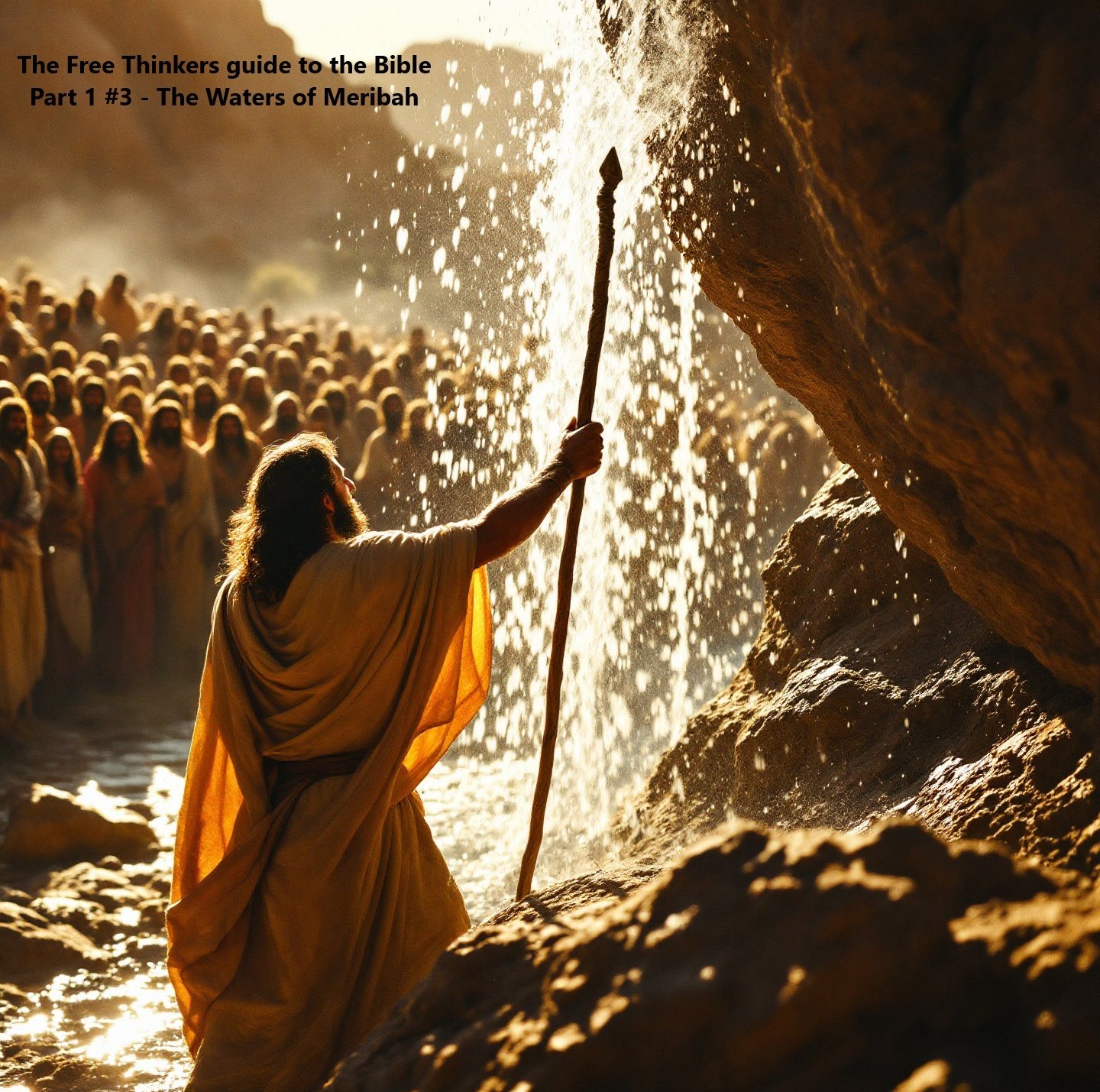
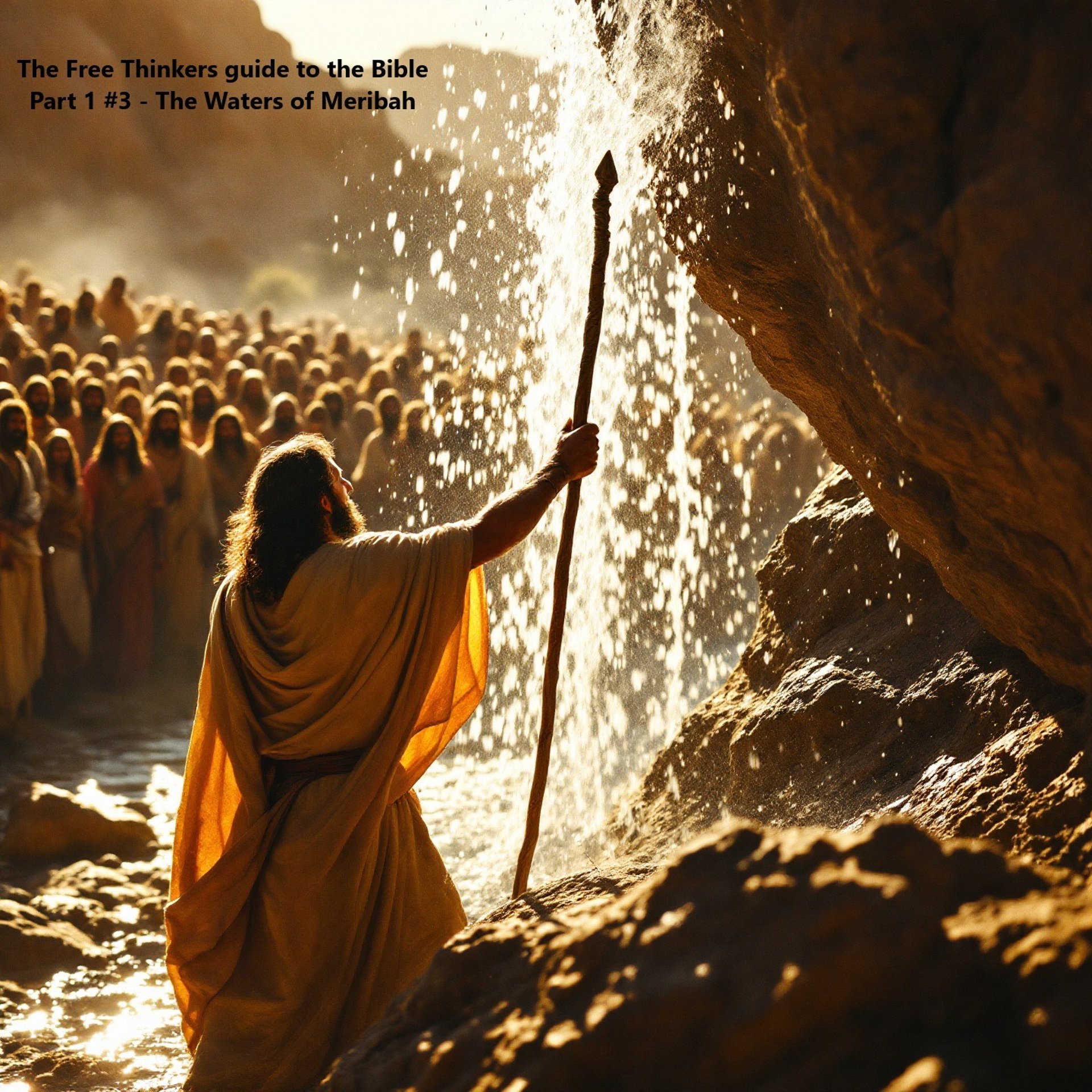
Exo 17:1 And all the congregation of the children of Israel journeyed from the wilderness of Sin, after their journeys, according to the commandment of the LORD (יהוה), and pitched in Rephidim: and there was no water for the people to drink. 2 Wherefore the people did chide with Moses, and said, give us water that we may drink. And Moses said unto them, why chide ye with me? wherefore do ye tempt the LORD? (יהוה) 3 And the people thirsted there for water; and the people murmured against Moses, and said, Wherefore is this that thou hast brought us up out of Egypt, to kill us and our children and our cattle with thirst? 4 And Moses cried unto the LORD (יהוה), saying, what shall I do unto this people? They be almost ready to stone me. 5 And the LORD (יהוה) said unto Moses, Go on before the people, and take with thee of the elders of Israel; and thy rod, wherewith thou smotest the river, take in thine hand, and go. 6 Behold, I will stand before thee there upon the rock in Horeb; and thou shalt smite the rock, and there shall come water out of it, that the people may drink. And Moses did so in the sight of the elders of Israel. 7 And he called the name of the place Massah, and Meribah, because of the chiding of the children of Israel, and because they tempted the LORD (יהוה), saying, Is the LORD (יהוה) among us, or not?
Comparison and Examination
In the Meribah “A” account the people have no water and complain to Moses and Aaron. The two of them go to the tent of meeting and prostrate themselves. The Creator tells them to take the staff and tell the rock to bring forth water. Moses strikes the rock twice and water comes forth. The Creator then tells Moses and Aaron that they have committed a grievous transgression and will not enter the Promised Land with the people of Israel. (Whatever that transgression may have been).
In the Meribah “B” account the people have no water and complain to Moses. Moses calls on the Creator. The Creator tells him to hit the stone with the staff in the sight of the elders of Israel. He does, water comes forth and all is well.
Summary
We see two distinct versions of the same account. In the “A” version, striking the rock is bad.
In the “B” version it is good.
In the Numbers account “A”, we see that the writer of the Numbers version has Aaron assisting Moses. Moses and Aaron are both called to bring forth the water for the people.
We will examine this writers motives closer as our study moves on. Please be aware of the words/phrases that the “A” writer uses consistently throughout much of their accounts. Examples: Aaron, priest, Glory, Holy/Sanctify - We will highlight most of these instances in future studies
In the Exodus “B” account , Moses performs the actions alone.
Conclusion
The two accounts are quite different from each other. We continue to see distinct differences in context and wording between them.
If you wish to continue exploring and seek greater understanding, please continue with the next study:
All of the material on this site is the product of my twenty-five years of research and study in the fields of Middle Eastern history, archeology (focusing on the Levant), biblical theology, (the study of the Christian, Judaic and Islamic religions), linguistics (I have studied the Hebrew and Greek languages in order to gain the original writers perspectives). I have personal experience with the following faiths: Southern Baptist, WWCG, CGI, Messianic Judaism and Judaism I lived in a torah based monotheist community based on humanist teachings and values for several years. I have been writing studies/articles and parables since the early 2000s. I published many of my works on the www.YHWHisEl.com site at that time; with a focus on monotheism and the non deity of Jesus (Yehoshua).
After identifying many peculiarities in the TaNaKh while teaching, I tasked myself with determining the source of the inconsistencies. I began my search in the first five books of the bible. I read through them many times; locating inconsistencies and attempting to find the golden key that would unlock them. I read many articles, publications and books in which the authors attempted to explain the irregularities (most based on a version of the JDEP theory) and I tested each against the inconsistencies and all of them failed to provide a viable answer. I then used critical thinking and tested potential theories until I finally found the solution that solved every problematic area. The Free thinkers guide to the Bible is the culmination of this process.
I only use AI for images on this site; I did not use AI to reach my conclusions or use it to write or structure my material.
I do not condone AI scraping or any other form of theft of intellectual property.
If you choose to share the information I present; please be courteous and give credit to this site and myself (the author).
Author: Hoyt Allen Spiker - 2024 - 2026 - Shemoth20@Gmail.com
Part 1 #3 - The Waters of Meribah